
TL;DR | Business Networking in China
Business networking in China is less about meeting volume and more about trust, context, and continuity. Introductions often act as a credibility shortcut, while cold outreach can be uneven without a strong reference point and a clear, specific ask. Effective networking blends offline relationship building (events, roundtables, dinners, site visits) with disciplined online follow up, especially through WeChat. Executives get better results when they map the right stakeholders, treat first meetings as the start of a process, validate insights through multiple viewpoints, and plan follow up before the trip. Many leaders also choose structured formats such as business delegations to reduce randomness and navigate these challenges efficiently.

Business networking in China often looks familiar on the surface. You attend events, book meetings, exchange contact details, and follow up. The difference is what happens in between. In many sectors, trust and access are shaped by introductions, context, and reputation as much as by a strong pitch deck.
That is why a China business networking trip can deliver very different results depending on your approach. Two executives can visit the same city for the same number of days and leave with completely different outcomes. One returns with polite conversations and little clarity. The other returns with credible relationships, decision grade insight, and a clear path forward.
This guide explains how networking in China for executives typically works, what often fails, what tends to work, and how to avoid common mistakes when building relationships in the market.
What Works Best For Executive Networking
Approach | Best For | Typical Risk | How To Improve Outcomes |
Warm introduction via trusted intermediary | Senior access and faster trust building | Misalignment if the purpose is unclear | Share a one paragraph objective and a simple agenda |
Trade show or industry event meetings | Rapid stakeholder coverage in one place | Lots of noise and low signal | Pre book priority meetings and define decision questions |
WeChat follow up after meetings | Maintaining momentum and relationship continuity | Losing clarity without next steps | Send a short recap and confirm one specific next action |
Cold outreach to senior stakeholders | Targeted access when you lack a network | Low reply rates and misread intent | Make it relevant, specific, and framed around learning |
Dinners or informal settings | Trust building and relationship calibration | Overdoing it or losing focus | Keep it professional and tie back to business context |
Single partner led itinerary | Speed when you already trust the partner | Single thread bias in market understanding | Validate through additional viewpoints and independent checks |
Source: InfluChina, based on 25+ expeditions delivered.
Why Business Networking in China Is Different
In many markets, networking is a way to widen a pipeline. In China, networking is often a way to establish whether a relationship is credible, safe, and worth investing in.
Several realities shape this dynamic:
- Trust tends to be built through context and continuity, not one meeting
- Reputation and references can influence access to senior stakeholders
- Role clarity matters, including decision rights and hierarchy
- Follow up is part of the signal, not an administrative step
In China, relationships often start with context before commerce. Without the right introductions and positioning, conversations can stay surface level.
If you treat networking like a quick transaction, meetings can feel busy but unproductive. If you treat it as a staged process, you often get better access and more candid information.

The Role of Introductions, Intermediaries and Trust
Introductions are more than a convenience in China. They often act as a credibility mechanism. When someone trusted makes the connection, it signals that you are worth time and attention.
Common intermediaries include:
- Industry associations and chambers of commerce
- Investors, advisors, accelerators, and ecosystem operators
- Existing suppliers, customers, or platform partners
- Professional services firms with strong local networks
- Alumni networks and executive peer communities
The strongest introductions are specific. They explain who you are, why the meeting matters, and what you are trying to learn or validate.
Practical ways to use intermediaries well:
- Share a one paragraph brief with a clear objective
- Make the request easy to accept with suggested time windows and a simple agenda
- Respect the introducer’s reputation by staying focused and professional
- Follow up clearly with next steps, not vague enthusiasm

Why Cold Outreach Rarely Works in China
Cold outreach can work, but it is less reliable than many executives expect. Often, the missing ingredient is context.
Common reasons cold outreach fails:
- The recipient cannot quickly assess your credibility or intent
- Senior stakeholders have heavy inbound volume
- Messages are too broad and read like a partnership pitch
- Language and positioning can be misread, even with translation
What tends to work better is warm, context rich outreach. If you must start cold, aim for “credible and specific,” not “broad and optimistic.”
A practical approach that improves response rates:
- Identify the exact stakeholder and function you need
- Anchor the message in relevance to their business priorities
- Ask for insight first, not a partnership
- Propose a low friction next step, such as a short call with a clear agenda
- Add a local connector when possible to turn cold into warm access
Cold outreach is not impossible. It is just uneven. In China, credibility transfers faster through trusted intermediaries than through unsolicited pitches.
Online Vs Offline Networking in China
China is highly digital, but executive networking works best when you combine online continuity with in person trust building.
Online: WeChat As the Operating Layer
For many leaders, WeChat becomes the practical communication layer for introductions, follow ups, group chats, documents, and updates.
Useful norms:
- Exchange QR codes quickly and follow up with a short reminder message
- Keep early messages brief and context rich
- Avoid heavy attachments and long paragraphs
- Confirm next steps clearly, including timing
Offline: Events, Dinners, Site Visits, And Trust Building
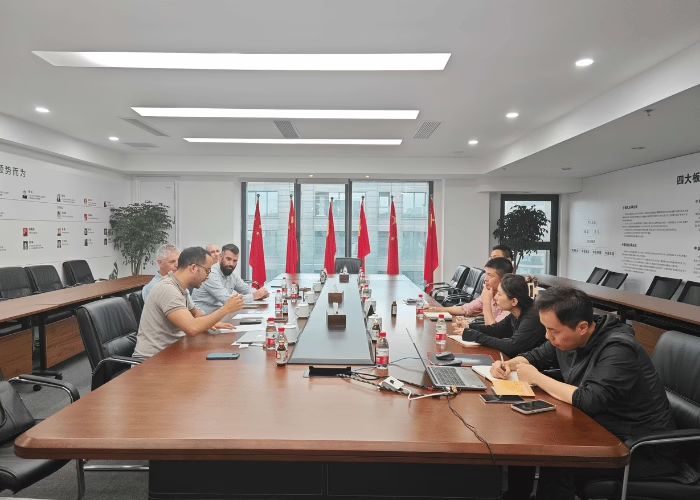
Offline interactions still matter because they build trust faster. Trade shows, industry conferences, and curated roundtables can concentrate the right stakeholders in a short time.
Dinners can matter too, not because deals are closed over food, but because people observe how you operate when the conversation is less scripted.
For a China business networking trip, the best outcomes often come from meeting in person first, then maintaining momentum through disciplined follow up.
China Business Culture Networking Norms Executives Often Miss
This is less about memorising etiquette and more about understanding what others are optimising for: clarity, risk reduction, and relationship quality.
Decision Making And Hierarchy
The person in the room may not be the final decision maker. Your goal is to understand how decisions are made and who influences them.
Helpful process questions include:
- Who typically owns this decision internally?
- What would a strong next step look like from your side?
- What concerns tend to come up at approval stage?
Communication Style And Signal
Direct disagreement is not always expressed directly. Neutral responses can still signal constraints. Slower follow up can also reflect internal alignment, not disinterest.
Focus on clarifying next steps and giving an easy way to progress.
Continuity Matters
Trust often builds through repeated, consistent interactions. A single meeting establishes interest. Continuity is what makes you real.

Common Mistakes Foreign Executives Make
The most common mistakes are structural, not personal:
- Over pitching before trust and relevance are established
- Meeting the wrong stakeholder level and mistaking politeness for progress
- Relying on one relationship thread and missing broader context
- Treating a visit as a one off event with no follow up system
- Under investing in interpretation and local context, leading to misreads
- Scheduling too many meetings with no time for reflection and relationship building
If the visit does not produce clearer decisions, clearer next steps, or clearer risk understanding, the issue is usually preparation or format, not effort.
How Structured Environments Can Improve Networking Outcomes
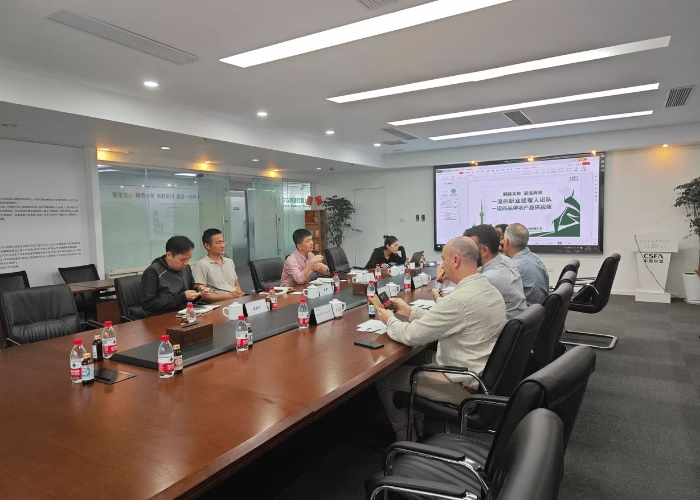
Structured environments can improve outcomes because they reduce randomness. Rather than assembling meetings one by one, executives enter a format designed to create relevant access, shared context, and a clearer sequence of interactions.
In practice, structured approaches can help by:
- Creating introductions with context, which improves trust transfer
- Reducing time loss from misaligned meetings and schedule changes
- Providing multiple viewpoints, which reduces single source bias
- Setting clearer expectations for what each interaction is for
- Making it easier to maintain momentum after the visit
For executives seeking structured access, some organisations offer structured business delegations designed to improve access and reduce friction while keeping the focus on decision quality rather than volume.
Practical Takeaways For Executives
If you are planning a China business networking trip, the goal is not to collect business cards. It is to leave with clearer decisions, stronger relationship threads, and a follow up path you can execute. These practical takeaways help you stay focused on access, signal, and continuity, even when schedules change.
- Define three decision questions you must answer during the visit
- Map stakeholders, not just companies, and prioritise the right functions
- Invest in warm introductions where possible, even if prep takes longer
- Treat the first meeting as step one, and plan follow up before you travel
- Combine offline trust building with online continuity through WeChat
- Compare perspectives to avoid building strategy from one narrative
- Leave space in the schedule for reflection and relationship building
Conclusion
Business networking in China rewards clarity, context, and continuity. The fastest way to waste time is to treat networking as a volume activity. The most effective approach is to build access deliberately, understand how trust transfers, and follow up in a structured way so relationships can develop beyond the first meeting.
Many executives choose structured formats such as business delegations to navigate these challenges efficiently.
FAQ on Business Networking in China
How does business networking in China work compared to Western markets?
Business networking in China is typically more relationship led and context heavy. Trust, credibility, and introductions can influence access and how direct conversations become, especially early on.
Why are introductions so important for business networking in China?
Introductions often transfer credibility. When a trusted intermediary connects you, it reduces perceived risk and can make senior stakeholders more willing to engage.
Does cold outreach work in China?
Sometimes, but response rates are often uneven. Cold outreach tends to work better when it is highly specific, clearly relevant to the recipient, and framed around learning or problem solving rather than a broad partnership pitch.
What is the best way to follow up after meetings in China?
Send a short message that includes context, a brief recap, and one clear next step. WeChat is commonly used for ongoing communication, document sharing, and coordinating follow ups.
What are common mistakes foreign executives make when networking in China?
Over pitching too early, meeting the wrong stakeholder level, relying on one relationship thread for market insight, failing to plan follow up, and under investing in interpretation and local context.
What should executives prepare before a China business networking trip?
Three decision questions for the visit, a stakeholder map (roles and decision rights), a short intro brief, a meeting agenda template, and a follow up plan with clear next steps.
Online vs offline networking in China: which matters more?
Both. Offline meetings build trust faster, while online channels like WeChat maintain continuity and momentum. The best outcomes come from combining in person interactions with disciplined follow up.
How can executives tell if meetings are producing real “signal”?
Look for specificity, consistent answers across multiple stakeholders, clarity on constraints, and concrete next steps. If conversations stay polite and vague, it may be an access or positioning issue.
What is “China business culture networking” in practical terms?
It usually means understanding hierarchy, decision processes, and communication style, and showing reliability through continuity. It is less about etiquette rules and more about reducing risk for the other side.
Why do some executives use structured formats for networking in China?
Structured environments can reduce randomness by improving access, providing context, and increasing the proportion of relevant conversations in a short time. Many executives choose structured formats such as business delegations to navigate these challenges efficiently.
