TL;DR | Planning A China Networking Trip
A strong china networking trip is measured by decision-maker access, trust built in compressed time, and clear next steps—not meeting volume. Most trips fail for predictable reasons: weak introductions, misaligned attendee seniority, agenda drift, and coordination friction. A structured format can reduce those risks. InfluChina’s China Business Delegation & Networking Expedition is designed around pre-arranged HQ meetings, small executive groups (8–12), official government briefings, curated B2B sessions, interpreters, and a multi-city route across Beijing, Shanghai, and Shenzhen with Hong Kong business gateway sessions—so executives spend time in qualified conversations rather than chasing confirmations.

A networking-focused business trip to China can accelerate partnerships, distribution, sourcing, hiring, or investment—but only if it’s planned like an executive access project, not a travel plan. In China, outcomes are shaped less by “effort” and more by three variables: access quality, meeting design, and coordination risk.
This article covers the common failure points foreign executives face—and how to plan around them with a structured approach where InfluChina can help early in the process.
What A “China Networking Trip” Actually Means For Executives
A networking trip in China is a targeted, relationship-led visit designed to create (or deepen) trust with specific stakeholders: potential partners, channel operators, suppliers, investors, regulators, or senior hires. Unlike general market visits, the return depends on who you meet and what happens next, not the number of meetings in your diary.
For executives, a China networking trip is “working” when each meeting produces at least one of these outcomes:
- A credible introduction to the real sponsor (or the person who controls the internal process)
- A fast fit/no-fit conclusion (with constraints and timelines surfaced)
- A defined next step (pilot scope, diligence path, commercial discussion, site visit, or a second meeting with the owner)
Executive takeaway: Your calendar is a strategy document. Four meetings with decision-grade stakeholders can outperform ten meetings with unclear authority.
Common Challenges For Foreign Executives Planning A China Networking Trip
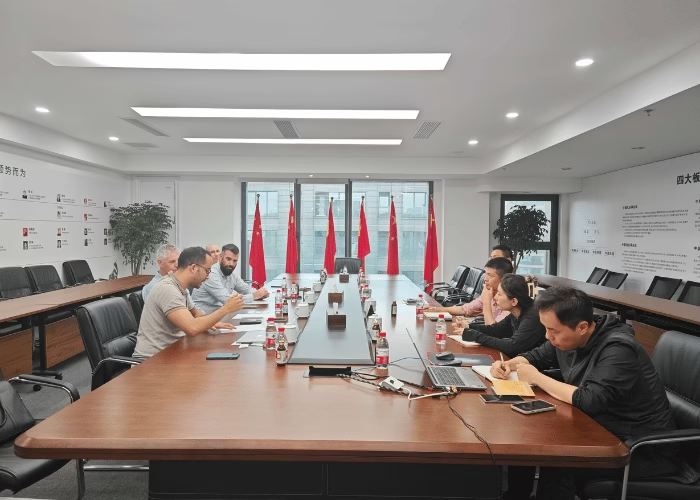
Access Is Uneven Without Credible Introductions
Cold outreach can work, but response quality is inconsistent—especially at senior levels. The highest-value conversations usually come through intermediaries who can transfer credibility: associations, investors, ecosystem partners, or existing suppliers/clients.
You Meet “Friendly” Stakeholders, Not The Owners
A full calendar can still be low-signal if attendees don’t hold decision rights. Many executives return with polite meetings but no commercial momentum because the real sponsor never engaged.
Meetings Drift Without A Decision-Focused Agenda
If your meeting doesn’t end with one clear next step (pilot scope, diligence path, commercial term discussion, second meeting with the owner), it becomes “nice to meet you” activity.
Coordination Risk Eats Executive Time
Last-minute changes, unclear interpretation, logistics friction, and multi-city fatigue are not minor issues—they directly reduce meeting quality and follow-up clarity.
Reality check: A “busy” trip is not the same as a productive one. In China, access quality often determines the quality of insight.
Build Access The Right Way (Introductions Beat Cold Outreach) For Business Networking In China
If you want senior meetings, optimise for introductions, not volume. The introducer’s role isn’t just a forward—they translate intent, signal seriousness, and reduce uncertainty about who you are.
Who Can Open Doors In China
Your strongest “door openers” are people or institutions whose reputation matters to your target:
- Existing clients, suppliers, investors, or board relationships with China reach
- Industry associations and chambers of commerce
- Professional services firms with relevant networks (legal, accounting, market-entry)
- Alumni networks and executive peer groups
- Platform/ecosystem partners who benefit from your presence
How InfluChina Helps With Executive Introductions
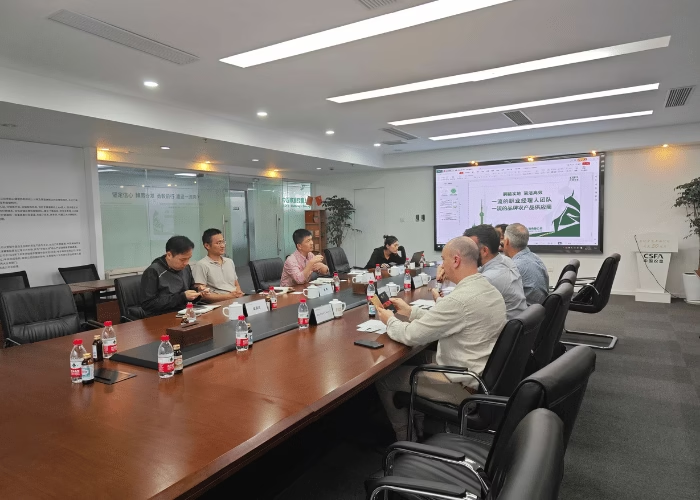
For executives planning a china networking trip, the hardest part is rarely travel—it’s securing credible introductions that lead to meetings with real decision-makers. InfluChina helps by structuring introductions through a pre-arranged itinerary built around headquarters-level access, curated briefings, and facilitated networking, so conversations start with context and credibility rather than cold outreach.
Instead of relying on “hope it lands” emails, the expedition format is designed to reduce access uncertainty: meetings are set up in advance, agendas are framed for executive-level discussion, and on-the-ground support (including interpretation and coordination across key hubs like Beijing, Shanghai, and Shenzhen) helps keep the right stakeholders aligned as the trip moves city to city.
Executive shortcut: The value isn’t “more meetings.” It’s fewer, higher-signal sessions with the right stakeholders—plus a format that protects senior time and keeps next steps moving.
A Practical Solution For A China Networking Trip: Structured Access And Execution
If your goal is decision-maker access in a short window, structure matters. InfluChina positions its trip as a networking-focused business expedition built around pre-arranged meetings, briefings, and curated sessions, with end-to-end organisation covering travel, meetings, interpretation, and local coordination.
For executives seeking a pre-arranged format, a curated China business delegation may be more effective.What this structure typically includes at executive level:
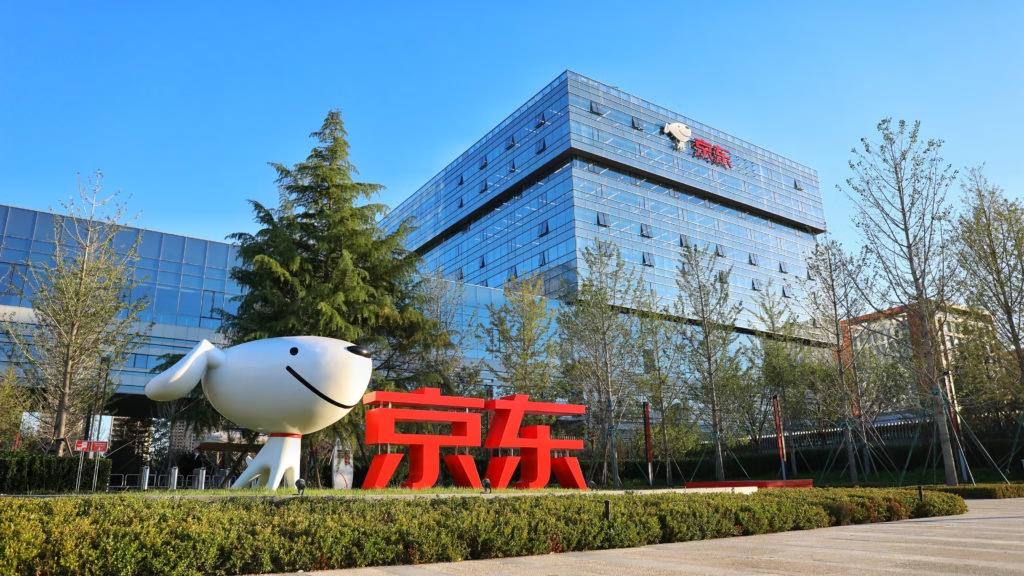
- Pre-arranged HQ meetings with major Chinese tech and commerce players (e.g., Alibaba, Tencent, JD.com, Tmall, ByteDance)
- Official government briefings covering investment policy, setup, incentives, and regulation
- Curated B2B sessions & networking with vetted partners, suppliers, and ecosystem professionals
- Market & ecosystem deep dives into platforms, districts, and supply chains
- Multi-city business exposure across Beijing, Shanghai, and Shenzhen, plus Hong Kong gateway sessions
- Seamless logistics & support, including interpreters and local guides
China Networking Trip Itinerary: How Structure Improves Executive Outcomes
Executives don’t just need meetings—they need the right sequence: context → access → validation → next steps. InfluChina’s published itinerary is explicitly designed around that flow, combining a pre-departure briefing, HQ visits, government briefings, matchmaking, and a closing roundtable.
Example Itinerary Flow For A Multi-City China Networking Trip
- Day 0: Virtual pre-departure briefing & market overview
- Day 1: Arrival and orientation in Beijing
- Day 2: JD.com & ByteDance HQ visits
- Day 3: Beijing to Shanghai — market intro
- Day 4: Shanghai government briefing & workshops
- Day 5: Alibaba campus & supplier encounters
- Day 6: Shenzhen — Tencent & startup ecosystem
- Day 7: B2B matchmaking & scaling workshops
- Day 8: Hong Kong business gateway sessions
- Day 9: Roundtable & departures
This matters because it reduces two common executive trip failures: fragmented meetings without context, and high-effort coordination that blocks senior focus.
Quick Executive Planning Framework (Even If You’re Not Joining A Group Trip)
Whether you self-plan or use a structured format, keep your trip anchored to three decisions:
- What is the single objective (partner, distribution, sourcing, hiring, investment)?
- Who must you meet to move that objective (the owner, not just the operator)?
- What is the “next step menu” (pilot, diligence, commercial review, second meeting)?
Minimum executive assets to bring:
- A 10–12 slide executive deck with a clear ask
- Two outcome-based case studies
- A one-page “who we are + why now” brief for introducers
- A follow-up template (recap + one next step + owner + timeline)
Meeting rule: If you can’t name the decision you want by the end of the meeting, the meeting will default to polite conversation.
Table: Common China Trip Challenges And How A Structured Expedition Mitigates Them
Challenge | What It Causes On The Ground | How A Structured InfluChina Trip Helps |
Weak introductions | Senior stakeholders don’t engage | Pre-arranged HQ meetings and organised networking access |
Wrong attendee level | “Nice meetings” but no decisions | Small executive groups and curated sessions designed for meaningful interaction |
Agenda drift | No clear next step | Government briefings, workshops, and a planned sequence from context to action |
Coordination risk | Time lost to changes/logistics | End-to-end organisation including interpretation and local coordination |
Market context gaps | Misread signals and constraints | Market & ecosystem deep dives plus on-the-ground learning |
How InfluChina Helps Executives Plan A Networking Trip In China
Framed simply: InfluChina helps executives by designing access and reducing execution friction:
- Access: curated HQ meetings and introductions that are difficult to secure reliably on a first self-directed trip
- Context: official briefings and ecosystem deep dives that make meetings more decision-grade
- Execution: interpreters, local guides, and coordinated multi-city logistics so leadership stays focused on decisions
- Follow-through: a post-trip contact pack / business kit is positioned as part of the program outcomes
Conclusion
A china networking trip is a compressed trust-building exercise. Executives get the best outcomes when they optimise for access quality, decision-focused agendas, and fast follow-up ownership—not meeting volume.
If you have limited time on the ground or you’re entering the market without reliable senior introductions, a structured itinerary with pre-arranged access (HQ visits, government briefings, curated B2B sessions, and coordinated multi-city execution) can materially reduce risk and increase the proportion of meetings that convert into next steps.
FAQ
FAQ on Planning A China Networking Trip
What Is A China Networking Trip?
A China networking trip is a business visit designed to build trust, secure qualified introductions, and turn meetings into defined next steps with decision-makers.
How Do I Plan A Business Trip To China Focused On Networking?
Start with one objective, map the decision-makers required to move it, use credible introducers, run meetings toward one decision, and pre-assign follow-up ownership (owner + timeline) before you travel.
Why Do Executives Use Structured Networking Trips In China?
Because structured formats reduce randomness: they improve access, align agendas, and reduce coordination risk through pre-arranged meetings, briefings, interpretation, and coordinated logistics.
What Does InfluChina’s China Business Delegation & Networking Expedition Include?
The service page describes pre-arranged HQ meetings, small executive groups (8–12 participants), end-to-end organisation (including interpretation and local coordination), official government briefings, curated B2B sessions, market deep dives, and a multi-city itinerary across Beijing, Shanghai, and Shenzhen with Hong Kong gateway sessions.
Do I Need To Speak Chinese To Join Meetings?
No—briefings and visits include English↔Chinese interpretation, and materials are positioned as bilingual.
Are Meetings Guaranteed With C-Level Executives?
The program states access to senior management teams and official representatives, while C-level access depends on availability and internal approval.