

TL;DR | China Market Entry Strategy
Succeeding in China takes more than a good product — it requires a localized strategy and long-term commitment.
Start by researching your market, adapting your brand and communication to Chinese consumers, and choosing the right entry model (e.g., cross-border e-commerce, JV, or WFOE).
The brands that win in China work with local experts, invest in influencer marketing, and build a strong digital presence on Douyin, WeChat, and Xiaohongshu.
Plan for proper budgeting, protect your IP, and focus on authentic storytelling to earn trust. With the right roadmap and a China marketing agency as your partner, your brand can enter the market confidently and grow sustainably.
Step 1: How to Assess If Your Business Is Ready for China
Before entering China, brands must evaluate their financial, operational, and cultural readiness to compete in a dynamic, fast-paced digital landscape where consumer behavior evolves rapidly.
Before developing a successful China market entry strategy, it’s essential to take a step back and evaluate whether your business is truly ready to enter this highly competitive and unique market. Unlike Western markets, entering China involves a different set of rules, expectations, and consumer behaviors that require careful consideration and long-term commitment.
One of the first things to assess is your financial readiness. Expanding into China demands an initial investment—not only in product development and logistics, but especially in marketing, branding, and e-commerce setup. Whether you plan to launch through cross-border platforms like Tmall Global or create a local entity with a fully localized online store, the upfront costs can be significant. A limited budget can restrict your ability to generate visibility in a crowded digital space where local brands and well-established foreign players already dominate.
Next, evaluate whether your product is suitable for the Chinese market. This goes beyond basic demand: it involves understanding how your product fits into the local lifestyle, tastes, and cultural context. Even successful global brands often need to adapt flavors, packaging, pricing, or messaging to meet the expectations of Chinese consumers. What works in the West may not resonate in China—and assuming otherwise is a common reason why brands fail. This is especially true when it comes to digital marketing in China, where tone, visuals, and platform selection must align with local preferences to truly connect with the audience.
Finally, assess your team’s capacity and expertise. Do you have local partners or experts who can guide you through regulatory requirements, consumer trends, and platform-specific strategies? Building a strong foundation early on will allow you to move with confidence as you develop the next stages of your China market entry strategy.
Step 2: How to Do Market Research in China Before Entry
Understanding China’s consumer trends, regional differences, and industry competition is essential to identifying market gaps and tailoring your offer effectively.

A solid China market entry strategy starts with one of the most crucial steps: comprehensive market research in China. China is not a monolithic market—it’s a vast, complex, and highly segmented landscape with significant differences between regions, cities, and consumer groups. Without deep and accurate research, companies risk entering a market they don’t fully understand, leading to misaligned offerings, poor brand positioning, and ultimately, failure.
Understanding consumer behavior, current market trends, and local competitors is essential to making informed strategic decisions. What do your potential customers value most—price, quality, sustainability, prestige? Which brands are already dominating your niche, and how do they communicate? Are there regulatory or logistical challenges specific to your sector?
Thorough research can also help identify hidden opportunities. For example, while first-tier cities like Beijing and Shanghai are often saturated, second- and third-tier cities may present growing demand with lower competition. Likewise, emerging trends on platforms like Xiaohongshu or Douyin can reveal niche segments you might not have considered—insights that are critical when shaping an effective China marketing strategy.
Skipping this step or relying on assumptions based on Western markets is one of the most common—and costly—mistakes businesses make when approaching China. What appears promising on the surface may not hold up when tested against local realities, especially when consumer expectations evolve rapidly.
In conclusion, investing in comprehensive market research before entering China is not optional—it’s essential. It will help you avoid wasting time and resources on an unfit strategy, and instead allow you to build a China market entry strategy based on real insights, not guesswork.
Before entering the Chinese market, brands should conduct thorough research in several key areas. The table below summarizes essential factors to investigate and the potential risks of overlooking each one.
Key Research Areas for a Successful China Market Entry Strategy
| Research Area | What to Investigate | Risk of Ignoring This Step |
|---|---|---|
| Consumer Behavior | Preferences, values, purchasing habits, digital touchpoints | Misaligned product positioning and marketing messaging |
| Market Demand & Trends | Size of the opportunity, growing segments, local lifestyle trends | Entering a declining or oversaturated segment |
| Competitor Landscape | Who are the main players? How do they communicate? What do they offer? | Underestimating competition or copying ineffective strategies |
| Geographic Differences | Tier 1 vs Tier 2/3 cities, regional preferences and income levels | Launching in the wrong location with poor ROI |
| Regulatory Environment | Import regulations, certifications, sector-specific laws | Delays, fines, or being blocked from entering the market |
| Platform Ecosystem | Relevant eCommerce and social media platforms for your industry | Wasting budget on the wrong channels or missing key platforms |
| Cultural Nuances | Colors, symbols, language tone, packaging expectations | Negative brand perception or lack of connection with consumers |

Step 3: Set Your Goals and Long-Term Strategy for China Market Entry
A successful China market entry requires setting clear objectives—whether brand awareness, online sales, or partnerships—and aligning them with long-term growth ambitions.
One of the most common mistakes foreign companies make when building a China market entry strategy is approaching the market with short-term expectations. While China is full of opportunity, it’s also a market that requires time, persistence, and a flexible mindset. Success rarely comes overnight.
In China, marketing and sales strategies often involve a process of trial and error. Consumer preferences can vary greatly depending on region, age group, and even platform. What works for one brand or campaign may not work for another, even in the same industry. That’s why it’s essential to define clear business objectives—whether it’s brand awareness, market testing, revenue generation, or partnership building—but also to remain open to refining your approach as you gather data and feedback.
Rather than looking for immediate ROI, companies should focus on building a long-term presence and being ready to test, learn, and adapt. The insights gained through market research and initial testing phases are invaluable. They allow your team to identify which messages resonate, which platforms are most effective, and how to fine-tune your offer to better meet consumer expectations.
It’s important to understand that China is a marathon, not a sprint. Brands that succeed are those that invest the time to build trust, learn from their audience, and gradually scale their efforts based on performance and market response.

In short, defining long-term business goals and committing to a strategy that evolves over time is critical to success in China. A flexible, insight-driven approach will position your China market entry strategy for sustainable growth.
Step 4: Why Working With Local Experts Is Essential in China
Local partners and consultants bring critical insights into China’s business environment, regulatory frameworks, and cultural nuances that foreign companies often overlook.
Navigating the Chinese market without local guidance is one of the fastest ways to encounter obstacles. A key component of any effective China market entry strategy is finding reliable local partners or agencies who truly understand the cultural, legal, and digital landscape.
What has worked in Western markets often fails in China—not because the product is bad, but because the consumer mindset, communication style, and digital ecosystem are completely different. A campaign that performs well in Europe or the U.S. might fall flat in China if it doesn’t resonate with local values or isn’t adapted to platforms like WeChat, Xiaohongshu, or Douyin.
That’s why collaborating with partners who have real, on-the-ground experience is essential. A good local partner can:
- Help you avoid costly mistakes and delays.
- Guide your localization strategy.
- Offer insights into consumer behavior and competitors.
- Recommend the best platforms and marketing approaches for your sector.
If you’re looking for guidance, InfluChina can support you at every stage of your expansion. We offer a full range of services through specialized departments—including digital strategy, content localization, influencer marketing, and e-commerce operations—designed to help your brand grow sustainably in China.
Step 5: How to Localize Your Brand and Product for Chinese Consumers
Localization goes far beyond translation—it involves adapting product design, messaging, and customer experience to resonate with Chinese preferences and digital habits.
In a market as vast and competitive as China, localization is not optional—it’s essential. A successful China market entry strategy must go far beyond simple translation; it requires a deep understanding of your target audience and a tailored approach that speaks directly to their expectations, habits, and cultural context.
Chinese consumers are highly connected, well-informed, and have access to a wide range of local and international brands. To capture their attention, your product, brand, and communication must be fully adapted to their preferences. This could mean adjusting product features, changing packaging design, or rethinking your brand messaging entirely. For example, concepts like “premium” or “healthy” may carry different meanings in China than in the West, and visuals, color choices, and even naming conventions can influence purchasing decisions.
Equally important is the localization of your communication strategy. You need to clearly define who your target is, what platforms they use, and how they consume content. A message that resonates with Gen Z in Shanghai will likely differ from one aimed at young mothers in Chengdu. Without this clarity, even the best campaigns risk being ignored.
With intense competition across every industry, the brands that succeed are those that manage to differentiate themselves quickly and meaningfully. Localization helps you not only fit into the market—but stand out within it.

Localization is key to succeeding in China. The following table highlights product and brand elements that should be adapted for Chinese consumers, with examples and potential risks if overlooked.
Examples of Product and Brand Localization for the China Market
| Element | What to Localize | Example | Risk if Ignored |
|---|---|---|---|
| Product Features | Flavors, ingredients, sizing, packaging | Adjusting flavor profiles to suit Chinese taste (e.g. less sugar, more tea-based flavors) | Low relevance, poor sales |
| Brand Positioning | Values, messaging, tone of voice | Reframing “organic” to focus on safety and quality, not just sustainability | Brand misunderstood or seen as irrelevant |
| Visual Identity | Colors, symbols, layout, product names | Avoiding unlucky colors (e.g. white) and using auspicious elements (e.g. red, gold) | Negative cultural associations |
| Communication Style | Content format, platform, language nuance | Using short videos and memes on Douyin instead of long blog articles | Poor engagement, weak brand visibility |
| Audience Segmentation | Defining detailed personas by city tier, lifestyle, or age group | Targeting Gen Z urban females on Xiaohongshu with beauty-related storytelling | Generic messaging that doesn’t convert |
Step 6: China Market Entry Models Explained (Cross-Border, JV, WFOE, Distributor)
Choosing the right entry model determines how you operate, sell, and manage compliance in China, from cross-border testing to full local establishment.
Choosing the right entry model is one of the most strategic decisions in your China market entry strategy. It will define how your brand operates, how you engage with consumers, and how much control and risk you’re willing to take. China offers several entry models, each with its own advantages, requirements, and level of commitment.
Here are the most common entry options:
6.1 Cross-Border E-Commerce (CBEC)
For international brands looking to enter the market efficiently, Cross-Border E-commerce China presents an ideal path. You can sell directly to Chinese consumers via platforms like Tmall Global, JD Worldwide, or Kaola. Ideal for brands testing the market without establishing a physical presence. This model has lower regulatory barriers and allows gradual brand building engagement, relevance, and authenticity rather than paid ads alone.
- Quality Over Spend: High-engagement posts gain visibility, reducing reliance on costly campaigns.
- User Interactions: Likes, comments, and shares significantly influence distribution.
- Community Focus: Content that resonates with users outperforms pushy brand promotions.
6.2 Local E-Commerce Presence
For brands ready to commit, opening a store on domestic platforms like Tmall, JD.com, or Douyin e-commerce allows access to a broader audience—but also requires product registration, local operations, and deeper investment in marketing and logistics.
6.3 Distributor or Importer Model
Working with a trusted local distributor who handles importation, compliance, and retail distribution. This option reduces operational burden but limits control over brand communication and pricing.
6.4 Joint Venture (JV)
Partnering with a local company to create a shared business entity. This model is useful in sectors that require local licensing or government relationships but comes with risks in terms of shared control and governance.
6.5 Wholly Foreign-Owned Enterprise (WFOE)
Setting up your own independent entity in China, giving you full control over operations, HR, and branding. This model is suited for long-term commitment and brands with the resources to manage local teams and comply with all regulations.
Once the entry model is selected, defining your sales channels is equally important. In China, e-commerce is king—but success often depends on choosing the right platforms for your product and target audience. Understanding how e-commerce in China works is crucial, as the ecosystem is fast-paced, highly competitive, and platform-specific. For example:
- Tmall and JD: Great for mainstream retail and high-traffic exposure.
- Xiaohongshu: Perfect for lifestyle, beauty, and health products aimed at younger, female consumers.
- Douyin (TikTok China): Highly effective for impulse purchases driven by video content.
- WeChat Mini Programs: Useful for building loyalty and direct communication with consumers.
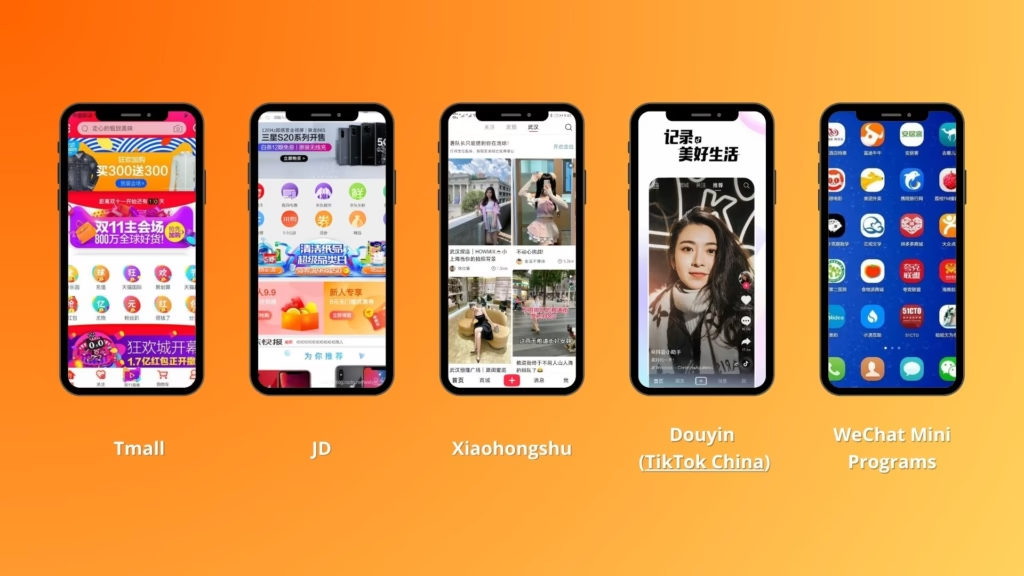
Choosing the right model and sales channels ensures that your China market entry strategy is not only feasible, but also aligned with your goals, capabilities, and target audience behavior.
Step 7: How to Launch and Market Your Brand in China
Marketing success in China depends on storytelling through social platforms like Douyin, WeChat, and Xiaohongshu, combined with influencer collaborations that drive trust and conversion.
Once your product and operations are ready, it’s time to activate your brand in China through a tailored marketing campaign. In a market where digital platforms dominate the consumer journey, your ability to build awareness and trust online will determine the success of your China market entry strategy.
However, China’s digital landscape is completely different from the West. Global platforms like Google, Instagram, Facebook, or YouTube are blocked. Instead, China has developed its own powerful and highly integrated ecosystem of social media, e-commerce, and content platforms—each with distinct audiences and functions. To navigate this complex environment effectively, many brands choose to work with a China marketing agency that understands the local platforms, consumer behavior, and content formats that truly drive engagement and conversion.
Here are some of the key platforms to consider for your marketing campaign:

7.1 WeChat
The most ubiquitous app in China, WeChat combines messaging, social media, payments, and even e-commerce within a single platform. Having an official WeChat account is essential to establish credibility, as it signals that your brand is legitimate, professional, and committed to the Chinese market.
Beyond visibility, WeChat is a powerful tool for direct communication and customer retention. Brands use it as a local equivalent to email marketing, regularly sending content, promotions, and product updates to their followers via broadcast messages. Through Mini Programs, brands can also offer e-commerce functionality, loyalty programs, or customer service—all within the app. In short, WeChat is not just a platform—it’s an ecosystem, and a must-have for any serious China market entry strategy.
7.2 Xiaohongshu (Little Red Book)
A content-driven platform that blends user-generated reviews with lifestyle inspiration, Xiaohongshu marketing is ideal for beauty, fashion, wellness, and premium consumer goods targeting young, urban female audiences.
Influencer campaigns perform particularly well on this platform, especially when combining KOCs (Key Opinion Consumers) and KOLs (Key Opinion Leaders). KOCs provide authentic, peer-level content that builds trust and credibility, while KOLs help generate high traffic and brand awareness through engaging visuals and storytelling. Many brands choose to collaborate with an experienced influencer agency in China to manage this dual strategy effectively and ensure alignment with local trends and platform dynamics. Working with Xiaohongshu influencers, in particular, allows brands to tap into highly engaged lifestyle communities and leverage authentic content that feels native to the platform. This combination is especially effective for launching new products and boosting social proof in a competitive environment.
If you’re interested in learning more about how influencers work in the Chinese market, you can download our free ebook on influencer marketing in China for in-depth insights, case studies, and practical tips.
Download our free eBook on influencer marketing in China—packed with platform insights, campaign tips, and real examples to help you get started with confidence.
7.3 Douyin (TikTok China)
The short-video king in China, Douyin is a leading platform for viral content, product discovery, and influencer-driven storytelling. For those unfamiliar with the platform, what is Douyin? It’s the Chinese counterpart of TikTok—but with far more advanced e-commerce integration and a unique local ecosystem that blends entertainment and shopping seamlessly.
Thanks to its powerful algorithm and high engagement rates, marketing campaigns perform exceptionally well, especially when tailored to local trends and user behavior. Collaborating with a Douyin influencer can significantly boost visibility and engagement, as their content often blends entertainment with product placement in a way that feels organic to the platform. Its seamless e-commerce integration allows users to buy directly within the app, making it not only a channel for awareness, but also a powerful tool for conversion and sales.
7.4 Weibo
Once a leading platform for brand promotion, Weibo has shifted mainly toward news consumption and celebrity-related content. Today, it’s less effective for most brand-building campaigns, especially in sectors where lifestyle and community engagement matter more. While still used for PR or official announcements, it’s no longer a primary channel for connecting with consumers.
7.5 Bilibili
A fast-growing video platform, Bilibili is especially popular among Gen Z and niche communities. As one of the leading China streaming platforms, it offers unique opportunities for brands to connect with younger audiences through long-form content, interactive features, and community-driven engagement.
It’s perfect for storytelling, tutorials, or creative brand collaborations, particularly for brands looking to implement a Bilibili marketing strategy that resonates with younger, content-savvy audiences.
To be effective, your marketing campaign must go beyond just presence—it needs to feel authentic, localized, and platform-native. This often involves working with local influencers (KOLs and KOCs), adapting your creative content to local humor and values, and being consistent in your messaging across all touchpoints. Well-planned influencer marketing campaigns in China play a key role in this process, as they help brands reach the right audience with content that resonates culturally and emotionally.
A well-executed marketing campaign—tailored to the local digital culture—is a cornerstone of any successful China market entry strategy. It's not just about visibility; it's about building trust, relevance, and connection with Chinese consumers from day one.
Top Digital Platforms in China for New Market Entrants (WeChat, Douyin, Xiaohongshu)
Selecting the right Chinese social platforms ensures your brand reaches the ideal audience—from short-video engagement on Douyin to community building on Xiaohongshu and CRM on WeChat.
Understanding the unique landscape of Chinese social media is essential for any brand entering the market. Each platform serves different purposes, audiences, and content formats, and knowing how to use them strategically can make or break your marketing success. Below is an overview of the most relevant digital platforms to include in your China market entry strategy.
Understanding China’s digital ecosystem is essential for market entry. The following table compares major Chinese social and eCommerce platforms, their main functions, target audiences, and best use cases for brands.
Comparison of Major Chinese Social Media and eCommerce Platforms
| Platform | Main Function | Audience | Best For |
|---|---|---|---|
| All-in-one app: messaging, content, CRM | General population, all ages | Building credibility, CRM, loyalty, Mini Programs, brand messaging | |
| Xiaohongshu | Social commerce, UGC + lifestyle reviews | Young urban women (18–35) | KOC/KOL campaigns, product discovery, beauty, wellness, fashion |
| Douyin | Short-form video, entertainment & shopping | Gen Z and Millennials | Viral campaigns, influencer marketing, video ads, conversions |
| Microblogging, trending topics, PR | News followers, celebrity fans | Official announcements, celebrity-related promotions | |
| Bilibili | Long-form video & niche communities | Gen Z, students, content creators | Storytelling, tutorials, brand education, gaming and tech segments |
China Market Entry Costs and Timelines
Before entering China, it’s essential to plan for both the financial investment and the time commitment required. Costs and timelines vary depending on your entry model, product category, and operational goals.
Estimated Market Entry Costs
Entry Model | Typical Cost Range | Key Inclusions |
Cross-Border E-Commerce (Tmall Global, JD Worldwide, Douyin Global) | USD 10,000 – 50,000 | Platform setup, product registration, localization, logistics, KOL marketing |
Representative Office (RO) | USD 20,000 – 60,000 | Legal registration, limited activities (market research, liaison) |
Joint Venture (JV) | USD 80,000 – 150,000+ | Legal setup, local partner onboarding, licensing, HR & tax |
Wholly Foreign-Owned Enterprise (WFOE) | USD 100,000 – 250,000+ | Full entity establishment, permits, HR, marketing, and compliance |
Offline Retail or Franchise Expansion | USD 150,000 – 500,000+ | Location setup, local staff, store promotion, and digital presence |
Typical Market Entry Timelines
Stage | Average Duration | Key Milestones |
Market Feasibility Study | 2 – 3 months | Market research, competitor audit, localization analysis |
Partner & Distributor Search | 3 – 6 months | Identifying and vetting reliable local partners |
Legal Setup & Licensing | 4 – 8 months | Entity registration, compliance approval |
Localization & Product Testing | 3 – 6 months | Product adaptation, pricing, consumer testing |
Marketing & Sales Launch | 6 – 12 months | Digital presence, KOL campaigns, retail rollout |
Partnering with a local marketing agency can accelerate each phase. Agencies familiar with Chinese regulations and consumer behavior help streamline setup, manage campaigns, and minimize costly delays.
Common Mistakes Foreign Brands Make When Entering China
Even strong international brands can struggle in China if they misread the market or underestimate cultural nuances. Avoiding the following mistakes can save months of effort and protect your investment.
1. Copying Western Strategies Without Localization
Many brands reuse Western marketing or product strategies without considering the preferences of Chinese consumers. What resonates in London or Los Angeles rarely connects in Shanghai or Shenzhen.
Adapt visuals, tone, and storytelling to reflect local culture, values, and humor.
2. Ignoring Chinese Digital Ecosystems
China’s digital world is entirely different — Google, Facebook, and Instagram are replaced by WeChat, Douyin, Xiaohongshu, and Weibo.
A dedicated China digital strategy, with localized content and platform-specific campaigns, is essential for visibility.
3. Focusing Only on Short-Term Sales
Brands that expect quick results often abandon campaigns too early. Chinese consumers need to see consistent presence and social proof before converting.
Invest in long-term community building and storytelling to earn trust and loyalty.
4. Overlooking Legal and IP Protection
Entering China without registering trademarks or ensuring legal compliance can lead to disputes or counterfeiting issues.
Secure trademarks and product certifications early through local legal experts.
5. Partnering With Unverified Agencies or Distributors
Choosing the wrong local partner can harm brand reputation and delay market progress.
Work with verified China marketing agencies or distributors who provide transparent reporting and have a proven track record.
6. Neglecting Customer Engagement and After-Sales Care
Chinese consumers value interaction — unanswered questions or poor service can quickly damage trust.
Implement a localized customer support system and active community management.
7. Underestimating Budget for Marketing
Even with the right product, brands fail if they invest too little in promotion. Visibility in China’s competitive digital landscape demands adequate budget allocation.
Plan at least 20–30% of total entry investment for ongoing marketing and influencer collaborations.
Summary:
China offers vast potential but demands patience, cultural understanding, and strategic investment. Partnering with a trusted local agency ensures that your entry strategy aligns with Chinese consumer expectations and delivers sustainable growth.
Conclusion
Success in China requires more than entry—it demands adaptation, patience, and continuous engagement through local partnerships and digital ecosystems.
Entering the Chinese market is not just a business expansion—it’s a strategic transformation. From understanding the complexity of the local consumer landscape to adapting your brand, product, and communication channels, every step of your China market entry strategy must be carefully planned and locally relevant.
Success in China rarely comes from copying what worked in the West. It requires patience, flexibility, long-term vision, and the willingness to test, learn, and adapt. Staying informed about Chinese marketing trends is equally essential, as consumer behaviors and digital platforms evolve rapidly. With the right local partners, a solid understanding of the digital ecosystem, and a strong commitment to localization, your brand can build meaningful connections with Chinese consumers and unlock long-term growth.
If you're looking for expert support in your China market journey, InfluChina offers a full-service approach to help you navigate every step—from research and strategy to execution and growth.
TL;DR summary
Succeeding in China isn’t about copying Western strategies — it’s about understanding a unique digital ecosystem, consumer mindset, and pace of innovation. The brands that win are those that localize authentically, adapt quickly, and partner with experts who know how to turn insight into impact. With the right strategy, China isn’t just a challenge — it’s your next growth story.
FAQ
FAQs About Entering the Chinese Market
1. What is the best China market entry strategy for foreign brands?
This depends on your industry, budget, and long-term goals. Common strategies include cross-border e-commerce, working with local distributors, or setting up a Wholly Foreign-Owned Enterprise (WFOE).
2. How much does it cost to enter the Chinese market?
Initial costs vary, but brands should budget for market research, localization, marketing campaigns, and e-commerce setup. Entering China requires a significant upfront investment to be competitive.
3. What are the main challenges of doing business in China?
Challenges include regulatory barriers, cultural differences, fierce local competition, and the need for ongoing adaptation to consumer behavior and digital trends.
4. Do I need a local partner to sell in China?
While not always legally required, working with a local partner or agency can help you navigate the market, avoid costly mistakes, and improve your chances of success.
5. Which Chinese social media platforms should I use to promote my brand?
Popular platforms include WeChat, Xiaohongshu, Douyin, and Bilibili. Each one serves different demographics and campaign goals, so the choice depends on your target audience.
6. Can I test my product in China without setting up a local company?
Yes, through cross-border e-commerce platforms like Tmall Global or JD Worldwide, brands can sell and test their products before establishing a physical presence.
7. What products sell well in China right now?
Categories like beauty, health, wellness, food & beverage, fashion, and baby products perform strongly, especially when promoted with localized messaging and influencer support.
8. How long does it take to succeed in the Chinese market?
There is no fixed timeline, but most brands need 6–18 months to start seeing traction. China is a long-term investment, not a quick win.
