TL;DR | Best Chinese Social Media for Brands
China’s top social media platforms—WeChat, Douyin, Xiaohongshu (RED), Weibo, Bilibili, Kuaishou, and Toutiao—each play unique roles in brand marketing and consumer engagement.
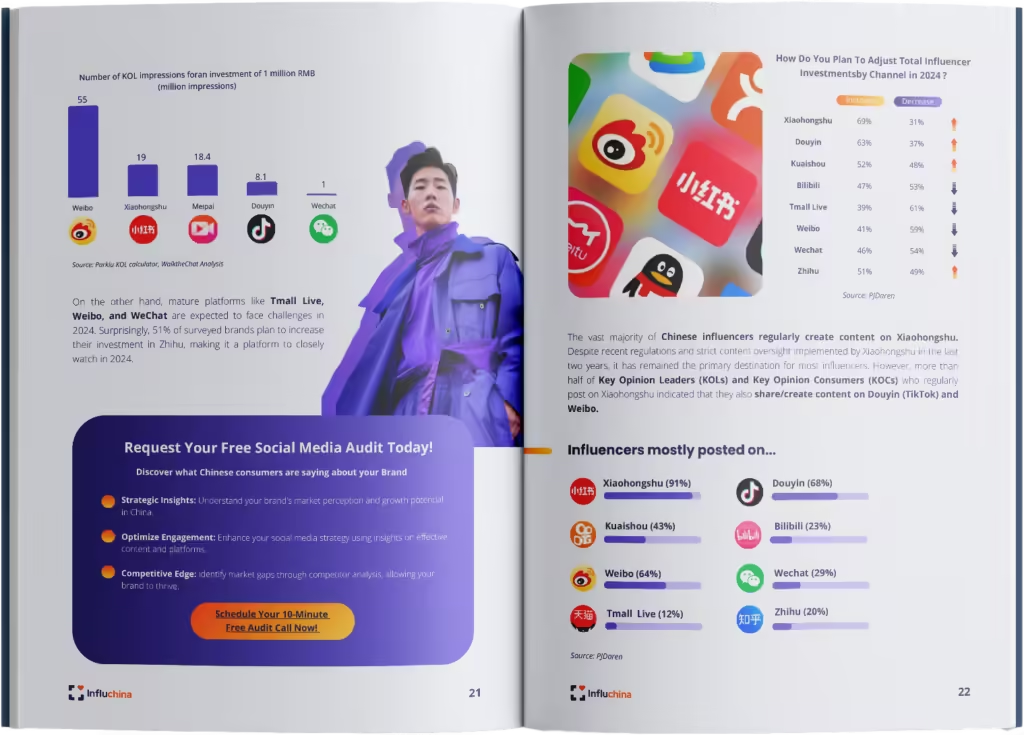
WeChat is essential for retention and private traffic, Douyin leads in social commerce, Xiaohongshu drives influencer-fueled discovery, Weibo amplifies trends, Bilibili connects with Gen Z, Kuaishou reaches lower-tier cities, and Toutiao excels at content-driven reach.
This guide explains their core features, business applications, and strategies for international brands entering China’s social media landscape.

Chinese social media platforms have emerged as the most vital marketing tools in the Chinese market. Citizens of this vast nation use them for everything—from comparing reviews and opinions on products and services to booking hotels, transportation, and travel. They follow their favorite Chinese influencers and purchase goods through social e-commerce.
One defining characteristic of Chinese citizens is their high level of digitalization. According to data from Turespaña, 99% of Chinese people access the internet via mobile devices. The internet is their primary resource for organizing travel and seeking recommendations for purchasing products and services.
99% of Chinese people access the internet via mobile devices
Given this high digital engagement, more and more businesses, both Chinese and foreign, are developing marketing strategies as part of their broader China market entry strategy to tap into this rich and promising market.
In this article, we will discuss the seven most important China social media platforms and provide key tips for optimizing your strategies to maximize their potential.
What Are the Key Chinese Social Media Platforms for Brands and Marketing?
With more than 1 billion active social media users, platforms like WeChat, Douyin, Rednote (Xiaohongshu), Weibo, Bilibili, Kuaishou, and Toutiao have become central to how Chinese consumers discover, evaluate, and purchase products.
Each platform serves a distinct purpose: WeChat focuses on customer retention and private traffic, Douyin drives viral awareness through short-video storytelling, Xiaohongshu influences lifestyle and travel decisions, while Weibo and Bilibili shape trends and communities.
China’s social media platforms have become crucial for businesses looking to establish trust and visibility among local audiences.
Below, you’ll find a comparative overview of the seven most important Chinese social media platforms, outlining their audiences, strengths, and marketing potential — helping your brand choose the right mix to engage Chinese consumers effectively.

Chinese Social Media Comparison Table
| Platform | Western Equivalent | Primary Content Format | Active Users | Common Business Use Cases | Challenges for Businesses |
| WhatsApp + lifestyle apps | Short articles, messaging, mini-programs | 1.3 billion | Used by brands across all industries for CRM, customer retention, and private traffic | Slow organic growth and limited content virality | |
| Xiaohongshu (RED) | Instagram + Pinterest | Image + text posts, vertical short videos | 300 million | Popular among beauty, fashion, food & travel brands targeting young urban consumers | Strict algorithm, limited reach without paid promotion |
| Toutiao | Reddit + Google Discover | Informative articles, news, videos | 280 million | Effective for education, tech, B2B services, and informative brand storytelling | Heavy competition and high volume of sponsored content |
| Douyin | TikTok | Short videos, live streams, in-app shopping | 800 million | Widely used by consumer goods, beauty, food, and lifestyle brands for large-scale reach | High competition and costly account management |
| Bilibili | YouTube + Netflix | Long-form videos, livestreams, animation | 100 million | Best for tech, gaming, education, and Gen Z-focused content | Requires high-quality production and niche community engagement |
| Microblogs, trending topics, celebrity content | 570 million | Used by entertainment, luxury, and government sectors for visibility and PR | Low organic interaction and oversaturated with brand content | ||
| Kuaishou | TikTok + Instagram | Short videos, live commerce | 700 million | Strong among FMCG, beauty, and agricultural products, especially in lower-tier cities | Weaker presence in Tier 1 and 2 cities |
1. WeChat: Why It’s the Super App That Connects Everything in China
WeChat is the leading social media platform in China, but it is much more than that. Launched by Tencent in 2011, it became the world’s largest standalone mobile app by 2018. Initially named Weixin, it was rebranded as WeChat for the international market in 2012.
After introducing its payment system, WeChat Pay, in 2014, the user base surged to 400 million, with 90% of users in China, according to Statista. By 2016, WeChat had around 900 million monthly users, and since 2019, it has surpassed 1 billion users.
WeChat’s multifaceted platform includes messaging, social media, and mobile payment services, making it an essential tool in the landscape of China social media. Its extensive features and wide user base make it a cornerstone for businesses aiming to engage with Chinese consumers through Chinese social media platforms.

Who Are the Users of WeChat?
According to Forbes, WeChat currently has over 1.3 billion active monthly users, the majority of whom are Chinese. Data from socialandson reveals that:
- 74% are aged between 16 and 34 years old.
- 18% are between 35 and 44 years old.
- 8% are over 45 years old.
74% of WeChat users are aged between 16 and 34 years old.
Additionally, 54% of WeChat users are men and 46% are women. Regarding the socio-economic context of these users:
- 77% live in developed urban areas.
- 17% live in less developed suburban areas.
- 6% come from rural areas.
This demographic information highlights the extensive reach and diversity of WeChat’s user base, reinforcing its importance in the landscape of China social media and Chinese social media.
Key Facts About WeChat Every Marketer Should Know
The data on WeChat is astounding, so here are five key facts that highlight the importance of this social media platform:
- 23% of internet users worldwide use WeChat.
- 28% of internet users worldwide aged 16 to 24 use WeChat.
- WeChat accounts for 79% of the penetration rate in China and 34% of total mobile data traffic.
- WeChat has over 1.3 billion active monthly users and more than 800 million users making monthly payments through the platform.
- 34% of WeChat users spend more than 4 hours daily on the platform, with an average of 66 minutes per day among all users.
23% of internet users worldwide use WeChat.
Types of WeChat accounts

To obtain a WeChat account, there are three completely different options depending on the type of presence you want to achieve.
| Type | Focus | Owner | Advantages | Disadvantages | Account Registration |
| Individual Account | Messaging, communication, and information | Individual person | Communication with users, follow official accounts | Cannot promote products or services | Requires verification from an existing WeChat user |
| Official Service Account | Create a community and engage with content | Any organization | Greater scalability (e-commerce, mini-apps), linkable with WeChat Pay | Only four push posts per month | Document verification required (15 days). Annual maintenance cost of $99 USD |
| Official Subscription Account | Create and distribute content | Any organization | No limit on monthly posts | Not compatible with WeChat Pay or Mini-apps | Document verification required (15 days). Annual maintenance cost of $99 USD |
If you need help opening an official WeChat account, contact our team and receive a quote today.
What Are the Key Features and Functions of WeChat for Brands?
WeChat is far more than a messaging app — it’s a complete digital ecosystem that integrates communication, content, e-commerce, and customer management into a single platform. For brands, it serves as the foundation of Chinese social media marketing, enabling companies to build loyal communities, drive sales, and maintain direct relationships with consumers.
Through WeChat Official Accounts, businesses can publish branded content, interact with followers, and convert traffic into measurable results. From notifications and livestreams to integrated payment tools and analytics dashboards, WeChat offers the essential functions every brand needs to connect, engage, and grow within China’s digital landscape.
For businesses managing a WeChat Official Account, the platform provides an all-in-one ecosystem to communicate, engage, and convert Chinese audiences.
Below are the core features that make WeChat an essential tool for any brand marketing in China:
-
Send Direct Notifications: Reach followers instantly with push notifications whenever new content or offers are published — ensuring your audience stays updated and engaged.
-
Advertising in WeChat: Launch targeted ad campaigns within WeChat’s ecosystem. Official Accounts can promote posts in user feeds, Moments, and mini-programs to drive visibility, traffic, and conversions.
-
Build and Engage a Community: WeChat supports private-traffic marketing, allowing brands to nurture loyal followers through personalized messages, member programs, and exclusive content.
-
Drive Traffic to E-commerce Stores: Integrate your WeChat page with your online shop or mini-program to enable seamless shopping experiences and direct product purchases.
-
Create and Configure a WeChat Account: Set up and verify your Official Account to unlock advanced business tools, analytics, and advertising functions tailored for Chinese consumers.
-
Video Streaming and Publishing: Host livestream events or share pre-recorded videos directly in-app. These features position WeChat alongside Douyin in blending entertainment and commerce for brand storytelling.
-
Metrics and Dashboard Visualization: Access WeChat’s analytics suite to track post performance, audience demographics, engagement, and campaign ROI — helping you refine strategy with real-time data.
Why Is WeChat Essential for Chinese Brand Engagement?
WeChat is more than a messaging app — it’s the cornerstone of China’s digital ecosystem and a must-have channel for any brand building long-term relationships with Chinese consumers. With over 1.3 billion monthly active users, WeChat integrates social communication, content publishing, e-commerce, and payment features in one unified platform.
For brands, it functions as a complete customer-engagement hub — enabling personalized communication through Official Accounts, loyalty programs via Mini Programs, and seamless conversion through WeChat Pay.
The sections below explore how these WeChat extensions work together to strengthen brand visibility, trust, and sales within China’s connected consumer journey.

WeChat Moments
WeChat Moments is a feature where users share images, messages, statuses, and web pages with a selected group of contacts, creating a personalized circle of friends.
WeChat Pay
WeChat Pay is an integrated service for mobile payments and transfers. According to a survey conducted by Steven Millward, over 31% of WeChat users use this mobile payment method in China.
WeChat Mini Apps or Mini Programs
The Mini Apps or Mini Programs system was introduced in 2017. These are lightweight applications within WeChat, each under 10 megabytes. They offer functionalities such as searching for information, live streaming, reading articles, online shopping, and playing video games.
WeChat Video Channel
WeChat Video Channels allow official accounts and users to publish audiovisual content, including live streams similar to TikTok. This feature adds another layer of engagement and interaction within the China social media landscape.
These extensions enhance WeChat’s utility and make it a vital part of the China social media ecosystem, providing a wide range of services and features that cater to both personal and business needs.
2. Rednote (Xiaohongshu): The Lifestyle Platform Driving Purchase Decisions
Rednote, also known as “Xiaohongshu, is a Chinese social media platform with applications for social e-commerce, user-generated content, influencer collaborations, and product and service reviews. In the West, it is often referred to as the “Chinese Instagram“.
Created by Charlwin Mao and Miranda Qu in 2013, Xiaohongshu initially aimed to be an online travel guide for Chinese consumers, where users could review products and share their shopping experiences. Over time, it has evolved into a major player in the China social media landscape, integrating social interactions with e-commerce functionalities.
For brands looking to connect with younger, trend-conscious consumers, marketing in Xiaohongshu offers unparalleled opportunities. The platform’s unique blend of user-generated content, authentic reviews, and influencer collaborations provides businesses with the tools they need to build trust and drive engagement. Whether it’s through influencer-led campaigns or direct interactions with users, Xiaohongshu’s ecosystem helps brands establish a strong presence and foster lasting connections with their audience. An influencer marketing agency can play a crucial role in leveraging the platform’s full potential, ensuring that your influencer collaborations are strategically aligned to maximize impact and engagement with the right target audience.
Xiaohongshu’s innovative integration of e-commerce and social media has solidified its position as a powerful tool in the Chinese social media ecosystem, making it a go-to platform for businesses aiming to tap into China’s digital-first market and to connect with younger, trend-conscious consumers.

Who Are the Users of Rednote
Currently, Rednote has over 300 million users, with 100 million of them being active monthly. Demographically, this social media platform is primarily popular in China’s first and second-tier cities.
According to reports from Staiirs:
- 70% of active users are under 35 years old, highlighting the importance of Generation Z for sales and promotion on Rednote.
- In terms of gender, 30% are men and 70% are women.
70% of Rednote’s monthly active users are under 35 years old, underscoring the significant role of Generation Z in driving engagement and marketing effectiveness on this platform. This demographic makes Rednote a key player in the China social media landscape, particularly for brands targeting younger audiences through Chinese social media.
70% of Rednote monthly active users are under 35 years old
Key Facts about Rednote and Its Audience Demographics
To understand the significance of Xiaohongshu for both the Chinese and international markets, here are five key facts that can be crucial when implementing a strategy on this Chinese social media platform:
- Rednote records over 450,000 new posts every day.
- Rednote is used by 64% of Chinese users in the initial search and evaluation phase before making a purchase.
- The most popular topics on Rednote are cosmetics, luxury, and tourism, with lower rankings for travel, food, and health.
- 57% of Rednote users reside in first and second-tier cities like Shanghai and Beijing.
- An effective way to gain exposure on Rednote is through collaboration with Chinese influencers.
These facts highlight the platform’s extensive reach and influence, particularly in the China social media sphere. Leveraging Xiaohongshu’s popularity and user engagement can significantly boost brand visibility and effectiveness in the Chinese social media landscape.
If you need help opening an official Rednote account, contact our team and receive a quote today.
What Type of Content Works Best on Rednote?
Rednote, also known as Xiaohongshu, is a platform built around authentic, community-driven content where credibility matters more than polished advertising. The best-performing posts combine storytelling, personal experience, and visual creativity — helping users discover, trust, and share new products or destinations.
1. Authentic Lifestyle and Experience Posts
Rednote users respond strongly to personal recommendations and experience-based reviews rather than overt promotions.
Brands and creators succeed by posting:
Real-life product reviews with before-and-after results
Travel diaries, food tastings, and “day-in-the-life” stories
Tutorials and educational mini-guides that offer value first
These formats help brands build trust and increase organic visibility in user searches and “Explore” feeds.
2. Visual and Vertical Short-Form Content
High-quality images and short videos are essential for engagement.
Successful posts typically feature:
Vertical video (9:16) up to 60 seconds
Minimal filters, natural lighting, and on-screen text
Captions that mix keywords + emotional storytelling, e.g., “Hidden café gems in Shanghai ☕”
3. Shoppable and Conversion-Oriented Content
Rednote’s growing social commerce ecosystem allows brands to link posts directly to their in-app store pages.
Product integration works best when it feels natural — for example:
Influencers demonstrating a product they genuinely use
Brands featuring customer stories or “how-to” demos
Seamless transitions between discovery (post) and purchase (shop tab)
This combination of authenticity and convenience makes Rednote one of China’s most effective platforms for influencer marketing and social commerce.
What Types of Accounts Exist on Rednote (Xiaohongshu)?
Rednote — also known as Xiaohongshu — offers two main types of accounts: individual accounts for users and influencers, and official brand accounts for companies and businesses. Each serves a different purpose in content creation, engagement, and marketing.
1. Individual Accounts
Individual accounts are used by regular users and creators to share authentic content and participate in the Rednote community. These accounts focus on personal expression and social interaction, including:
Publishing videos, photos, and text-based posts
Watching and hosting live streams
Following and engaging with other users’ content
Such accounts are ideal for Key Opinion Consumers (KOCs) and smaller influencers who build credibility through user-generated content and lifestyle storytelling.
2. Official Brand Accounts
Official accounts are designed for brands, companies, and professional influencers who want to build an official presence on Rednote.
Through these accounts, brands can:
Publish high-quality campaigns and product storytelling posts
Launch influencer collaborations and interactive promotions
Connect followers directly to their e-commerce stores on platforms like Tmall, JD, or Xiaohongshu’s in-app store
These features make Xiaohongshu a powerful platform for brand awareness, social commerce, and community engagement, helping international businesses leverage Chinese social media to connect authentically with target audiences.
Advantages & disadvantages of Rednote
| ADVANTAGES | DISADVANTAGES |
| Best Chinese social network to collaborate with influencers | Predominantly female user base |
| Qualified and recommended content | Difficult to contact support |
| Widely used during the search and evaluation phase | Can be difficult for smaller brands to stand out |
| Very effective in the fashion, cosmetics, home, tourism, and luxury sectors | High advertising cost |
What Are the Main Features of Xiaohongshu (Rednote) for Brands and Marketers?
Rednote combines the power of social networking, e-commerce, and advertising in one integrated ecosystem. Its unique hybrid model allows users to discover, share, and shop within a single platform, making it one of China’s most influential tools for digital marketing and influencer collaboration.
1. Rednote as a Social Platform
At its core, Rednote functions as a community-driven social network built around user-generated content.
Users post reviews, lifestyle moments, and personal recommendations through photos, videos, and text-based posts — all designed to feel authentic and experience-based.
Brands and influencers use this format to build trust, generate organic engagement, and spark viral trends among target audiences.
2. Rednote as an E-Commerce Platform
Beyond content sharing, Rednote also operates as a social commerce hub.
Users can buy directly through in-app product links or be redirected to e-commerce sites such as Tmall or JD.com.
This seamless integration between content and conversion allows brands to transform engagement into measurable sales while maintaining an authentic storytelling approach.
3. Rednote Advertising (RED Ads)
Rednote offers diverse advertising options that enhance brand visibility and conversion.
These include:
Open-screen ads: shown when users launch the app
In-feed ads: appearing within the user’s browsing feed
Search and hashtag ads: displayed in relevant discovery results
Such ad formats allow brands to reach users at multiple touchpoints — from awareness to purchase — while maintaining relevance to user interests.
Rednote has two faces: one as a social media and another as a social e-commerce platform.
If managing this ecosystem feels complex, partnering with a Xiaohongshu marketing agency can provide end-to-end support.
Agencies like InfluChina specialize in optimizing Rednote Ads, influencer collaborations, and social commerce strategies — ensuring your brand builds visibility, engagement, and measurable ROI in China’s competitive digital space.
How Does Xiaohongshu (RED) Work for Influencer Marketing?
Rednote stands at the intersection of Chinese social media, influencer marketing, and e-commerce, making it a must-have platform for brands targeting Gen Z and millennial consumers.
Its content format blends Instagram-style visuals with community-driven reviews, helping users discover products through authentic recommendations from Key Opinion Leaders (KOLs) and Key Opinion Consumers (KOCs).
What makes Xiaohongshu uniquely powerful is its trust-based algorithm — posts gain visibility through engagement quality, not just ad spend.
Successful content often includes:
Personal experience stories and tutorials
Lifestyle imagery with subtle product integration
Hashtag-based discovery optimized for search
Influencer campaigns on Xiaohongshu deliver exceptional results for beauty, fashion, travel, and wellness brands, as the audience relies heavily on peer credibility before purchasing.
By merging content, community, and commerce, Xiaohongshu has become one of the most effective platforms for influencer marketing in China, where authenticity directly drives sales.
3. Douyin (Chinese TikTok): China’s Short-Video Powerhouse for Brand Discovery
Douyin (also known as the Chinese TikTok) is a social network founded in 2016 by ByteDance, whose main function is to share and create short videos, as well as live streaming. One of the most important aspects of Douyin is social commerce, where it provides the possibility, within the application itself, to facilitate the online buying and selling of products and services.
Over the past 7 years since its creation, Douyin has had numerous opportunities to collaborate with various brands and sellers, helping them maximize their presence on the platform by providing recommendations and advice, so its important know Douyin advertising.

One of the most important aspects of Douyin is social commerce, where products and services can be bought and sold online.
Who Uses Douyin? Key Demographics and Consumer Trends
Douyin is one of the most popular social networks in China, especially among the younger population. It currently boasts over 800 million monthly active users. Of these users, 44% are women and 56% are men, with 41% of all users being between the ages of 16 and 24.
Surveys conducted by the app itself reveal that 90% of users log into Douyin every day, underscoring the value of maintaining a presence on the platform.
90% of Douyin users report using the app daily.

Key Facts About Douyin’s User Base and Content Trends
To further emphasize the significance of Douyin for both the Chinese and international markets, here are some interesting facts:
- 90% of Douyin users report using the app daily.
- Douyin’s parent company, ByteDance, reached a valuation of $280 billion in 2021.
- The most-watched categories are entertainment, pranks, dance, DIY, and sports.
- Douyin is the Chinese app where content is most likely to go viral.
- Collaborating with Chinese influencers is a highly effective way to establish your brand in China.
Key Features of Douyin for Brands
Douyin, China’s most influential short-video platform, offers brands an integrated mix of entertainment, commerce, and data-driven marketing tools. With more than 850 million monthly active users, it’s one of the core pillars of Chinese social media marketing, combining algorithmic discovery with seamless in-app shopping.
1. Smart Content Distribution
Douyin’s algorithm is built around interest-based recommendations rather than follower count. This means even new brands can reach massive audiences if their videos match trending topics or high-engagement behavior patterns. The system analyzes watch time, likes, and comments to continuously refine targeting — giving every post viral potential.
2. Livestreaming & Social Commerce
Douyin integrates e-commerce features directly into short videos and livestreams.
Brands can tag products, host live shopping events, and drive conversions without leaving the app. These streams combine entertainment with real-time sales, making Douyin one of the most effective platforms for impulse purchases and influencer-led campaigns in China.
3. Influencer Collaboration Tools
The platform’s creator marketplace helps brands connect with Key Opinion Leaders (KOLs) and Key Opinion Consumers (KOCs) across all price tiers. Douyin’s analytics dashboard offers transparent data — audience demographics, engagement rates, conversion potential — allowing precise campaign matching and performance tracking.
What Role Does Douyin Play in Social Commerce in China?
Douyin, the Chinese version of TikTok, dominates the short-video and social commerce ecosystem in China with over 850 million monthly users.
It’s where content, entertainment, and shopping converge — making it one of the most profitable channels for brand visibility and conversion.
Douyin’s algorithm prioritizes interest-based discovery, allowing even small brands to reach massive audiences through viral storytelling and influencer livestreams.
Brands use Douyin to:
Launch campaigns through short-form videos and KOL collaborations
Drive direct sales with in-video product links and live shopping events
Build awareness using challenges, music trends, and branded effects
This seamless integration between entertainment and e-commerce has turned Douyin into the driving force of China’s social commerce revolution, where consumers often move from watching to purchasing in seconds.
For international brands, success depends on local storytelling, fast response cycles, and native-style video creativity that fits Douyin’s energetic, authentic culture.
How to start selling products on Douyin?
Types of content and accounts on Douyin
When it comes to the types of content and accounts on Douyin, here’s a summary distinguishing between a personal account and an official account for businesses or individuals with commercial intentions.
| Personal Account | Official Douyin Account | |
| Content | Personal with no commercial intentions | About your organization with commercial intentions |
| Focus/Intention | Fun and entertainment | Promote your organization through content |
| Main Advantage | Possibility to promote posts with Dou+ | TikTok ads available. Detailed analysis of statistics |
| Audience | Minimal. Friends and acquaintances | Maximum. All types of audiences, especially Generation Z |
| Account Registration | Requires verification from an existing Douyin user | Document verification process required (15 days). Maintenance cost of 99 USD/year |
Comparison between Personal & Official Douyin Accounts. Source: InfluChina
4. Toutiao: The AI-Powered News and Knowledge Distribution Platform
Toutiao is a Chinese app for creating and distributing content, known for its use of machine learning tactics. The name means “Today’s Headlines,” reflecting the company’s belief that only the most interesting content for readers should make the news.

Who are the users of Toutiao?
Toutiao currently boasts 200 million active daily users, with more than 85% of them aged between 18 and 30, making it the Chinese platform with the largest Generation Z user base. Additionally, over 60% of the users are men, while the remaining 40% are women.
In terms of demographics, most users are from tier 1 and tier 2 cities and have a high level of education.
Nearly 45% of all users hold a bachelor's degree or higher.
Key Facts About Toutiao’s and its Audience
Here are some key facts about one of China’s most interesting social networks, Toutiao:
- Toutiao users spend an average of 76 minutes per day on the app.
- 38% of users are private business owners or self-employed.
- Toutiao is one of the most important B2B social networks in China.
- Advertising on Toutiao costs between 0.2 and 1.0 RMB per click.
- Most Toutiao users are from tier 1 and tier 2 cities.
Toutiao is the leading app for content distribution in China.
How Can Brands Use Toutiao for Content Marketing in China?
Toutiao, part of the ByteDance ecosystem (alongside Douyin), is one of China’s most powerful platforms for content distribution and brand visibility.
Unlike traditional social networks, Toutiao operates as an AI-driven news and content recommendation platform, making it ideal for brands that focus on educational, informative, or long-form storytelling.
1. Publish Thought-Leadership and Industry Insights
Brands can share expert articles, white papers, or opinion pieces that establish authority in their field. Toutiao’s algorithm prioritizes high-quality, informative content, allowing B2B, tech, and education companies to attract a professional readership organically.
2. Optimize for Algorithmic Discovery
Toutiao’s recommendation engine distributes content based on user interests and engagement behavior, not just followers.
By using relevant Chinese keywords, clear titles, and compelling visuals, brands can reach new audiences who haven’t interacted with them before, similar to SEO but within a closed Chinese ecosystem.
3. Leverage Video and Multi-Format Posts
Beyond articles, Toutiao supports short videos, infographics, and slides, helping brands diversify their storytelling. Integrating these formats increases retention and visibility in users’ personalized feeds.
4. Integrate Brand Stories With Douyin and Other ByteDance Channels
Because Toutiao is linked with Douyin and Xigua Video, content can be repurposed and cross-promoted, allowing campaigns to scale across multiple Chinese platforms. This synergy enhances reach and ensures message consistency across the ByteDance ecosystem.
9. Pros and Cons of Toutiao
Regarding the advantages and disadvantages of Toutiao, we highlight:
Pros and Cons of Toutiao
| ADVANTAGES | DISADVANTAGES |
| Personalized content recommendations | Filter bubble, limited exposure to diverse views |
| Good tool for B2B | Algorithm can be manipulative |
| Wide range of content topics | Privacy concerns, data collection |
| High user engagement, large active community | Low authority |
| Effective for targeted advertising | Potential for spreading misinformation |

5. BiliBili: The Creative Hub for Gen Z and Niche Communities
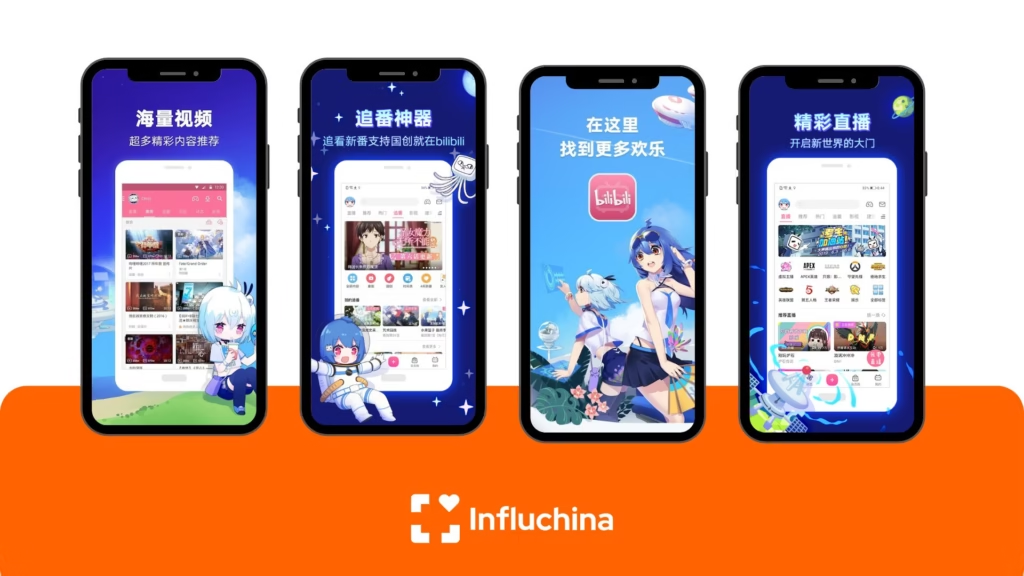
BiliBili, considered by Westerners as the Chinese YouTube, is the fastest-growing platform in China among Generation Z. It is often described as a Chinese version of YouTube, but it also combines elements of Netflix, as it hosts longer videos.

BiliBili is a combination of YouTube and Netflix.
Founded in 2009, BiliBili is the largest website in China for streaming anime and sharing long-form videos. The founder is Xu Yi, a passionate fan of manga, video games, and anime.
Who Are the Users of BiliBili?
As mentioned, it is the fastest-growing platform among Generation Z, comprising over 80% of its users. The average age of users is 21, and most are young people from lower-tier cities.
In terms of gender, BiliBili stands out from other Chinese social networks, with more than 68% of its users being men, while the remaining 32% are women.
BiliBili is the fastest-growing platform among Generation Z, making up over 80% of its user base.
Key Facts about BiliBili
Let’s look at some brief but relevant facts about BiliBili:
- BiliBili has annual revenues of over 1 billion euros.
- The most utilized marketing channel on BiliBili is live streaming, constituting over 80%.
- BiliBili already has nearly 15 million paid subscribers, who have access to exclusive content.
- The giants Alibaba and Tencent have invested hundreds of millions in BiliBili, making it one of the few companies backed by both.
- BiliBili has a net worth of over 40 billion dollars.
11. Types of Accounts and Content on Bilibili
Like most Chinese social networks, we find different types of accounts based on intent or content:
Official Account for Influencers | Official Account for Businesses | Individual Account | |
Objective | Gain followers and collaborate with brands. Intent | Promote products and services. Intent | Entertainment. No commercial intent |
Content | Content about the brands they promote or their projects | Content about their establishment, products, and services | Watching anime, manga, and video game content |
Owner | Influencer or KOL | Company or organization | Individual person |
Advantages | Visibility, collaborations with KOLs, and options for advertising and monetization | Visibility, access to premium features, and better collaborations | Practically unlimited content |
Disadvantages | Must have at least 100,000 followers | Videos are less recommended | No possibility of monetization |
If you need help opening an official Bilibili account, contact our team and receive a quote today.
When Should Brands Use Weibo or Bilibili?
Both Weibo and Bilibili play critical yet distinct roles in China’s diverse social media landscape.
Weibo, often called China’s “open network,” is ideal for mass awareness, trend amplification, and public relations. With more than 580 million monthly users, it’s the go-to space for viral hashtags, celebrity campaigns, and event promotion.
Brands use Weibo to reach the general public, drive large-scale discussions, and establish social proof around their identity.Bilibili, on the other hand, is a community-driven platform that appeals primarily to Gen Z audiences. Known for its long-form videos, animations, and creative storytelling, Bilibili is perfect for brands that want deeper engagement through educational, behind-the-scenes, or story-based content.
Successful strategies include tutorials, lifestyle documentaries, and collaborations with native creators who emphasize quality and authenticity.
In essence, Weibo is best for reach, while Bilibili is best for retention — combining both gives brands a powerful balance between visibility and community trust within the Chinese social network ecosystem.
6. Kuaishou: The Grassroots Video Platform Reaching Lower-Tier Cities
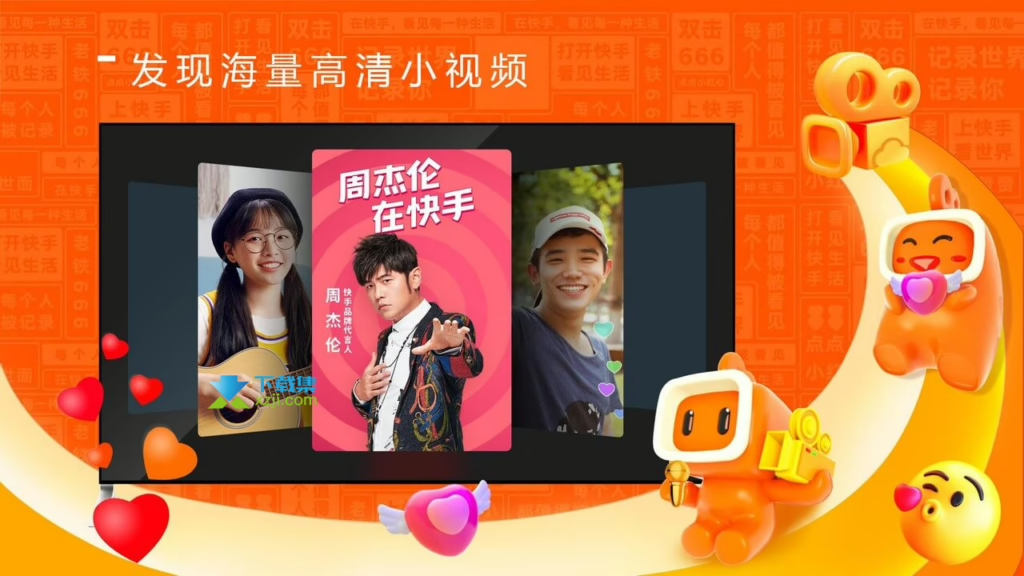
Kuaishou is a Chinese social network for live streaming and short videos that is gaining increasing popularity. It went public in 2021, and since then, its stock has risen exponentially. Despite its recent fame, it was founded in 2011 as a social network similar to Instagram and TikTok.

Who are the users of Kuaishou?
Kuaishou’s user demographics reveal a very diverse audience. In 2022, the app recorded over 600 million monthly active users, with 350 million of them active daily. Additionally, more than 80% of the users are young people born after 1990.
80% of Kuaishou users are under 34 years old.
It’s noteworthy that Kuaishou has mainly focused on users from tier 3 and 4 cities and rural areas, with only 10% of the users from tier 1 cities, according to a report by the South China Morning Post. Regarding gender, 44% are women, while the remaining 56% are men.
Key Facts about Kuaishou
Here are some key facts about this intriguing Chinese social network:
- Young users on Kuaishou aim to become successful KOLs (Key Opinion Leaders).
- Residents of lower-tier cities, who dominate Kuaishou, are 200% more interested in shopping than those in higher-tier cities.
- E-commerce operations on Kuaishou generated 380 billion yuan in 2022, with a year-over-year increase of 540% compared to 2021.
- Over 200 million live streams are broadcast daily on Kuaishou.
- Kuaishou hosts over 380 million content creators.
Residents of lower-tier cities, who dominate Kuaishou, are 200% more interested in shopping than those in higher-tier cities.
Types of Accounts and Content on Kuaishou
On Kuaishou, we have two types of accounts, like most Chinese social networks:
Commercial Account | Individual Account | |
Content | Upload photos and videos of products, provide purchase links, and interact with potential customers | View and upload content to share with friends |
For Whom | Brands and organizations | People looking for entertainment or to buy products |
Objective | Promote, sell products, and build a community | Entertainment |
The content is mainly focused on rural areas, as it is the only Chinese platform where citizens from these areas are not excluded. It consists of short entertainment videos created by the users themselves. Additionally, there are influencers and companies promoting themselves.
If you need help opening an official Kuaishou account, contact our team.
How Is Kuaishou Different for Lower-Tier City Reach?
While Douyin dominates urban China, Kuaishou is the preferred platform in lower-tier cities and rural regions, reaching audiences often overlooked by mainstream brands.
It boasts over 600 million monthly active users, primarily from Tier 3 to Tier 5 cities, who value authenticity, local content, and real-life storytelling.
Kuaishou’s success lies in its community-first algorithm, which rewards engagement over polish.
Brands can leverage it to:
Connect with new consumer groups in emerging regions
Run livestream e-commerce campaigns with relatable hosts
Build credibility through genuine interactions rather than polished advertising
For FMCG, food, education, and household goods, Kuaishou delivers strong ROI by fostering grassroots engagement — building brand loyalty in markets where trust and relatability matter most.
As China’s digital economy expands beyond major cities, Kuaishou offers marketers a unique gateway to the next wave of online consumers.
7. Weibo: The Platform That Shapes China’s Online Trends
Sina Weibo, commonly known simply as Weibo, translates literally to “microblog” in Chinese and operates much like Twitter. It’s an open Chinese social network focused on content sharing, community building, and visibility.
Founded in 2009 shortly after Western app censorship, Weibo saw significant investment when in 2013 Alibaba Group acquired 18% of the company, later increasing its stake to 32%.

Who uses Weibo?
Weibo boasts over 30% of Chinese internet users, totaling nearly 500 million active users per month. Of these users, 56% are male and 44% female, according to LaTercera. Nearly 80% are under 30 years old, with 12% aged between 31 and 40.
Key facts about Weibo
Here are some noteworthy facts about Weibo:
- By 2012, Weibo had nearly 370 million users, just three years after its inception.
- One of the most famous influencers on Weibo has over 100 million followers.
- Weibo has been free of fake accounts for 11 years.
- Livestreaming is a highly effective sales tool on the platform.
- Weibo integrates seamlessly with Taobao, allowing brands to use Chinese KOLs to promote products and Taobao stores in their content.
Weibo boasts more than 500 million active users per month.
Types of accounts and content on Weibo
On Weibo, like many Chinese social networks, users can have two types of accounts:
- Personal Account: Used to follow organizations, brands, and influencers, create and join communities, interact with others, and view content. Users can also promote their own posts.
- Corporate Account: Intended for businesses and organizations. These accounts gain official verification, allowing them to create content related to their company, interact with potential customers, and build a community interested in their products or services. Corporate accounts focus on company-related content such as updates, history, and promotions. They require document verification and an annual fee of $1,000 USD.
If you need assistance setting up an official Weibo account, please contact our team.
Pros & Cons of Weibo
Regarding the aspects where Weibo offers advantages and where it does not, we highlight:
Advantages | Disadvantages |
Massive user base and wide reach | Not always effective for brands; limited visibility without promotion |
Real-time access to news and trending topics | Risk of misinformation spreading quickly |
High user engagement and interactive features | Addictive usage and potential for cyberbullying |
Effective for marketing, branding, and awareness | Algorithm favors already popular content |
Supports diverse content formats (text, image, video) | Privacy concerns and extensive data collection |
What are the key features of Weibo for brands?”
Weibo is China’s leading open social media platform, often compared to a mix of Twitter and Instagram, where public conversations, viral trends, and celebrity culture shape mainstream digital life.
With more than 580 million monthly active users, it’s an essential tool for brand awareness, trend amplification, and real-time marketing within the Chinese social media ecosystem.
1. Real-Time Communication and Trend Amplification
Weibo thrives on speed and visibility.
Brands use it to join trending conversations, launch hashtag challenges, and connect directly with users through comments, reposts, and mentions.
Because Weibo content is public and shareable, it’s the best channel to amplify brand visibility, track consumer sentiment, and respond quickly to market events or crises.
2. Verified Brand Accounts
Official verification (the blue “V” badge) builds credibility and unlocks advanced marketing features.
Verified accounts can publish long-form content, pin posts, host giveaways, and access detailed analytics.
For international companies, verification also ensures higher exposure and protects against impersonation — vital for maintaining trust in China’s competitive digital space.
3. Advertising & Targeting Options
Weibo offers multiple ad formats optimized for brand growth, including:
Display Ads: Banners and native in-feed promotions.
Search Ads: Triggered when users look for keywords related to your products.
Fan Tunnel & Fan Headline Ads: Tools for reaching both followers and new audiences.
These ad types can be filtered by demographics, interests, and geography, allowing precise targeting of Chinese consumers across tier-1 to tier-3 cities.
4. Influencer Marketing Integration
Weibo’s ecosystem is deeply connected to China’s KOL (Key Opinion Leader) economy.
Brands collaborate with celebrities, micro-influencers, and industry voices to drive engagement and social buzz.
Weibo’s KOL database and analytics tools help marketers measure campaign performance — impressions, engagement rate, and ROI — in real time.
Conclusions
While China offers a wide array of social media platforms, not all of them serve the same purpose—especially when it comes to different business models. As shown throughout this article, the effectiveness of each platform varies significantly depending on whether a brand operates in the B2B or B2C space.
Some platforms are ideal for storytelling, influencer collaborations, or livestreaming sales, while others are more suited for thought leadership, long-form content, or professional positioning. Understanding these nuances is key to developing a successful strategy.
At our agency, Influchina, we specialize in designing customized Chinese social media strategies tailored to your business goals. Whether you’re a B2C brand looking to engage young consumers or a B2B company aiming to build authority, we can help you find the right platform mix.
Feel free to contact us if you’re looking to elevate your presence in the Chinese market.
Platform Suitability: B2C vs. B2B
| Platform | B2C Suitability | B2B Suitability | Best For |
| ★★★★☆ (Great for loyalty & CRM) | ★★★★★ (Top choice for B2B) | Private traffic, service content, long-term engagement | |
| Xiaohongshu | ★★★★★ (Excellent for lifestyle) | ★★☆☆☆ (Limited B2B use) | Influencer marketing, beauty, food, fashion |
| Douyin | ★★★★★ (Top B2C platform) | ★★☆☆☆ (Branding only) | Short videos, live commerce, Gen Z outreach |
| ★★★★☆ (Good for exposure) | ★★★☆☆ (PR, corporate updates) | Campaigns, brand awareness, trending topics | |
| Bilibili | ★★★★☆ (Great for Gen Z branding) | ★★☆☆☆ (Niche B2B only) | Long-form video, animation, gaming, education |
| Toutiao | ★★☆☆☆ (Less relevant for B2C) | ★★★★☆ (Strong for B2B content) | Thought leadership, informative articles, professional reach |
| Kuaishou | ★★★★☆ (Strong in Tier 3-4 cities) | ★☆☆☆☆ (Very limited B2B use) | Livestream sales, rural and lower-tier markets |
FAQ
FAQ on Chinese Social Media
What are the most popular Chinese social media platforms in 2025?
The most popular Chinese social media platforms in 2025 include WeChat, Douyin, Xiaohongshu (RED), Weibo, Toutiao, Kuaishou, and Bilibili. Each platform serves different purposes, with WeChat being dominant for messaging and CRM, Douyin for short videos and e-commerce, and Xiaohongshu for influencer-driven product discovery.
Why are Chinese social media platforms important?
Chinese social media platforms are important due to their extensive reach and significant opportunities they offer for foreign businesses to enter the Chinese market.
Which Chinese social media platforms are best for B2B marketing?
For B2B marketing in China, WeChat and Toutiao are the most effective platforms. WeChat is ideal for CRM, private traffic, and professional communication, while Toutiao excels in content marketing, thought leadership, and targeted advertising to educated professionals.
Which Chinese social media platforms are best for B2C brands?
Douyin, Xiaohongshu, and Kuaishou are the top platforms for B2C marketing in China. These platforms are ideal for product discovery, influencer marketing, and social commerce. Brands in fashion, cosmetics, food, and lifestyle see strong performance here.
How do I choose the right Chinese social media platform for my business?
Start by identifying your business type (B2B or B2C), target audience, and content style. For example, if you’re in luxury fashion targeting Gen Z, Xiaohongshu is ideal. If you’re a tech service provider, WeChat and Toutiao may suit better. Each platform has different strengths, so strategic alignment is key.
Can foreign companies advertise on Chinese social media?
Absolutely. Foreign companies can advertise on platforms like Douyin, WeChat, Xiaohongshu, and Weibo, but they need to set up official accounts, provide legal documents, and often work with local partners or agencies like Influchina to manage campaigns.
What is the difference between WeChat and Xiaohongshu?
WeChat is a multifunctional app for messaging, mini-programs, and payments—ideal for long-term engagement and private traffic. Xiaohongshu focuses on product discovery, reviews, and influencer content, making it better for B2C brands targeting young, urban women.
How important is influencer marketing in China?
Influencer marketing is critical in China. Platforms like Xiaohongshu, Douyin, and Bilibili thrive on influencer-generated content. Collaborating with KOLs (Key Opinion Leaders) and KOCs (Key Opinion Consumers) helps brands gain trust, visibility, and conversions.
How can I introduce my business on Chinese social media?
To introduce your business on major Chinese social media platforms, you can collaborate with WeNomad, an agency specializing in crafting marketing strategies for Chinese social media.
What is WeChat?
WeChat is the primary social media platform in China, boasting over 1.3 billion users worldwide.
Which is the best Chinese social media platform?
WeChat is the most used social platform overall, but for business promotion, platforms like Little Red Book (Xiaohongshu), Kuaishou, Douyin, or Toutiao are more popular.
Which is the most used Chinese social media platform?
WeChat remains the most used Chinese social media platform, with over 1.3 billion users and a wide range of functionalities.