
Canton Fair Guide 2026: Phases, Registration, Sourcing Strategy & More
The Canton Fair (officially the China Import and Export Fair) is the world’s largest trade fair, held twice annually in Guangzhou at the Pazhou Complex. It runs across three consecutive phases covering electronics, consumer goods, and textiles respectively. This canton fair guide goes beyond logistics — it covers phase strategy, supplier evaluation, the Canton Fair app, Canton Fair 365, and a post-fair follow-up playbook. Written by InfluChina’s China-based team, who run China Sourcing Trips for international buyers.
Table of Contents
Introduction
This canton fair guide was written for buyers who want to do more than just show up. Most guides tell you how to get your badge and which metro stop to use. This one tells you what to do when you walk through the doors of the Pazhou Complex — and how to leave with better suppliers, better prices, and a clear plan for what comes next.
The Canton Fair (also known as the China Import and Export Fair) is held twice a year — in spring (April/May) and autumn (October/November) — at the Pazhou Complex in Guangzhou, China. At approximately 1.55 million square metres across three phases, it is the world’s single most comprehensive sourcing event for international buyers. The official attendance guide is published in 10 languages, a signal of just how global this fair has become.
InfluChina is a China-based marketing and business consultancy with 6+ years of experience navigating China’s business ecosystem. Our team has supported international brands on everything from China market entry strategy to on-the-ground Canton Fair sourcing trips. This guide reflects that first-hand knowledge — not a travel blog’s interpretation of it.
What this guide covers:
- Canton Fair phases: Which one matches your product category
- Registration: Step-by-step badge process for overseas buyers
- Transport and logistics: Getting to Pazhou efficiently
- Digital tools: The Canton Fair app, Canton Fair 365, WeChat, and Alipay
- Supplier evaluation: How to tell factories from trading companies
- Post-fair follow-up: A 48-hour follow-up plan
1. What Is the Canton Fair? Key Facts at a Glance
The Canton Fair, officially the China Import and Export Fair, is the world’s largest trade fair. It is held twice annually in Guangzhou, China — in spring (April/May) and autumn (October/November) — at the Pazhou Complex in Haizhu District. The fair spans approximately 1.55 million square metres across three consecutive five-day phases, attracting over 200,000 international buyers from more than 210 countries and regions each session.
Key facts at a glance:
- Official name: China Import and Export Fair
- Location: Pazhou Complex (China Import and Export Fair Complex), Haizhu District, Guangzhou
- Frequency: Twice yearly — Spring (April/May) and Autumn (October/November)
- Scale: Approximately 1.55 million square metres
- Structure: Three consecutive phases, each lasting five days
- Metro access: Metro Line 8, Pazhou Station or Xingang East Station
- Registration: Free for overseas buyers at cantonfair.org.cn
For buyers new to how to enter the Chinese market, the Canton Fair is often the single most efficient first step — connecting you with hundreds of manufacturers across your category in just a few days.
Who Should Attend the Canton Fair?
The Canton Fair is best suited for importers, procurement managers, brand sourcing teams, and startup founders entering manufacturing. It serves buyers across all order sizes, from boutique brands placing first orders to large-scale retailers refreshing their supplier base.
- First-time importers: No existing China supplier relationships — the fair is the fastest way to build one
- Procurement managers: Comparing multiple factories across the same category in one venue
- Brand owners: Seeking OEM or ODM manufacturing partners
- Sourcing agents: Scouting suppliers on behalf of multiple clients
- Trade association delegations: Group visits coordinated through trade missions to China
First-time attendees with no existing China supplier relationships benefit most — the density of exhibitors per square metre makes it uniquely efficient for initial market mapping.
Plan Your Canton Fair Sourcing Trip with InfluChina
2. Understanding the Three Canton Fair Phases — Which One Should You Attend?
The Canton Fair is structured into three phases, each running for five days and covering distinct product categories. Understanding which phase aligns with your sourcing needs is the single most important pre-fair decision you will make. Attending the wrong phase means walking past thousands of irrelevant booths.
Phase 1: Electronics, Machinery and Industrial Products
Phase 1 of the Canton Fair covers electronics, machinery, and industrial products. It typically runs in the first five days of the spring (mid-April) and autumn (mid-October) sessions — verify exact dates for each session at cantonfair.org.cn.
- Product categories: Consumer electronics, auto parts, hardware tools, construction materials, industrial machinery, power equipment, and lighting
- Typical buyer profile: Industrial procurement teams, tech importers, hardware retailers, electrical equipment distributors
- Crowd level: High — Phase 1 consistently draws the largest buyer volumes
- Strategic tip: Pre-schedule appointments using the Canton Fair app before arrival — popular electronics exhibitors fill their meeting slots quickly
Phase 2: Consumer Goods, Gifts and Home Products
Phase 2 covers consumer goods, gifts, and home products, running immediately after Phase 1 — typically in the final days of April (spring) and late October (autumn).
- Product categories: Kitchenware, home decoration, garden products, toys, gifts, recreation and sports equipment, luggage, and festive supplies
- Typical buyer profile: Retail buyers, gift importers, home goods brands, merchandising teams
- Crowd level: Moderate to high — strong international buyer attendance for consumer categories
- Strategic tip: This phase is the most category-diverse — narrow your booth shortlist aggressively before arriving or you will lose days to browsing
Phase 3: Textiles, Food, Health and Medical Products
Phase 3 covers textiles, food, health, and medical products, running last — typically in early May (spring) and early November (autumn).
- Product categories: Garments, fabrics, home textiles, health supplements, medical devices, beauty products, and food commodities
- Typical buyer profile: Fashion importers, wellness brands, food distributors, healthcare procurement teams
- Crowd level: Typically the least crowded of the three phases — a genuine strategic advantage for buyers in these categories
- Strategic tip: Use the reduced crowd density to negotiate more freely — exhibitors have more time per buyer conversation, which means longer discussions and better first-meeting terms
Can You Attend Multiple Canton Fair Phases?
Yes, buyers can attend multiple Canton Fair phases — and many do. The phases run consecutively with brief overlapping transition days, making it possible to attend the final days of one phase and the opening days of the next. For buyers sourcing across multiple categories (for example, electronics and consumer goods), planning a 7-10 day visit spanning Phase 1 and Phase 2 is a viable and efficient strategy. Check the official schedule at cantonfair.org.cn to plan your overlap window precisely.
Canton Fair Phase Comparison — Which Phase Should You Attend?
| Phase | Timing | Key Product Categories | Typical Buyer Profile | Crowd Level | Strategic Tip |
|---|---|---|---|---|---|
| Phase 1 | Days 1–5 (Spring: mid-April; Autumn: mid-October) | Electronics, machinery, auto parts, hardware, construction, lighting | Industrial buyers, tech importers, electrical distributors | High | Pre-book exhibitor appointments via the Canton Fair app before arrival |
| Phase 2 | Days 6–10 (Spring: late April; Autumn: late October) | Consumer goods, kitchenware, gifts, toys, home decor, garden, luggage | Retail buyers, gift importers, home goods brands | Moderate–High | Shortlist booths aggressively — category breadth is highest here |
| Phase 3 | Days 11–15 (Spring: early May; Autumn: early November) | Textiles, garments, food, health products, medical devices, beauty | Fashion importers, wellness brands, food distributors | Low–Moderate | Leverage lower crowds for longer, more productive supplier conversations |
Source: Canton Fair official schedule (cantonfair.org.cn); crowd level and strategic notes based on InfluChina field experience.
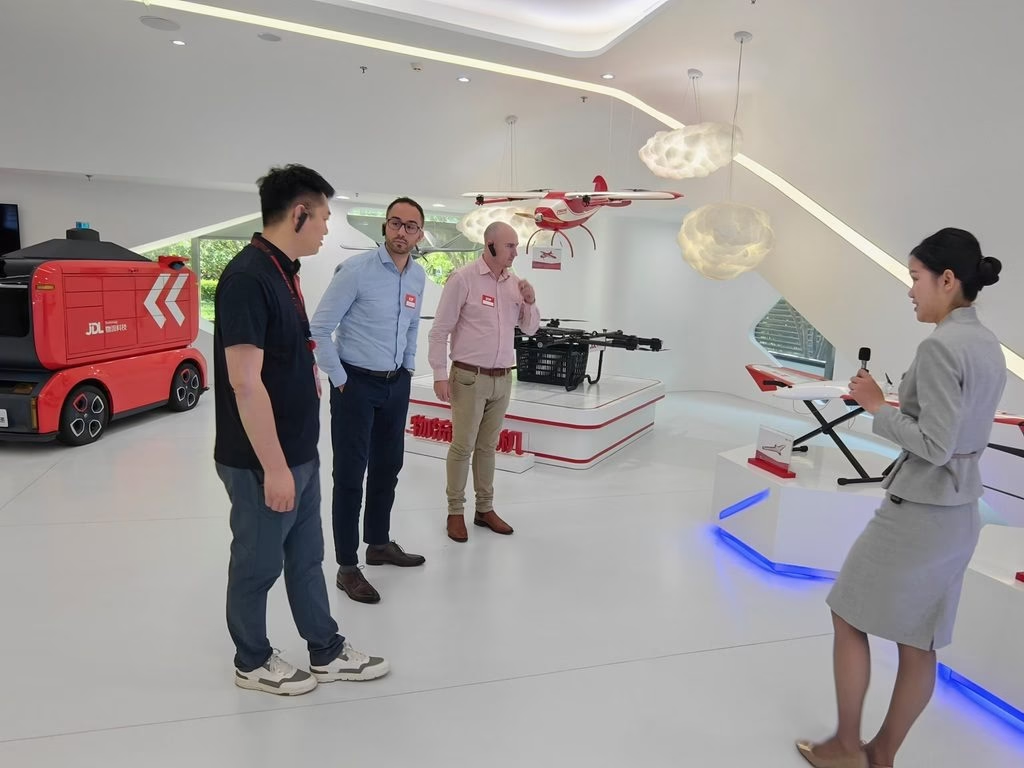
The single biggest mistake first-time buyers make at the Canton Fair is underestimating the scale. At approximately 1.55 million square metres, walking the Pazhou Complex without a pre-planned booth list is like walking into a city without a map. Shortlist your target booths for each day in the Canton Fair app before you arrive.
3. How to Register for the Canton Fair and Get Your Buyer Badge
Overseas buyers can register for the Canton Fair for free at cantonfair.org.cn. Registration is completed online before arrival; your Canton Fair buyer badge — the official accreditation credential required to enter exhibition halls — is then collected on-site at the badge collection counters at the Pazhou Complex. The process is straightforward, but doing it correctly in advance saves significant time on arrival day.
Canton Fair Overseas Buyer Registration — Step by Step
| Step | Action | Platform / Location | Time Required | Notes |
|---|---|---|---|---|
| 1 | Visit the official Canton Fair website | cantonfair.org.cn/en-US | 5 minutes | Use the English-language version; the site supports 10 languages |
| 2 | Create an overseas buyer account | cantonfair.org.cn (Buyer Registration portal) | 10–15 minutes | Requires valid email address and business details |
| 3 | Complete buyer profile and company information | Online registration form | 10 minutes | Include your company name, country, and product category interests |
| 4 | Upload passport copy | Online portal | 5 minutes | Valid passport is mandatory; must match the name on your visa |
| 5 | Submit registration and await confirmation email | 1–3 business days | Confirmation grants access to the badge collection system | |
| 6 | Request visa invitation letter (if required) | cantonfair.org.cn (same portal) | 3–7 business days | Available for nationalities requiring official invitation documentation |
| 7 | Collect buyer badge on-site | Pazhou Complex badge counters | 15–30 minutes on arrival | Bring original passport; badge is free for registered overseas buyers |
Source: Canton Fair official buyer registration portal (cantonfair.org.cn), verified 2026.
Do You Need a Visa to Attend the Canton Fair?
Most international visitors to the Canton Fair require a Chinese tourist or business visa. Visa requirements vary significantly by nationality — some countries benefit from visa-free access or visa-on-arrival arrangements with China, while others require a full consular application. Do not assume your requirements without checking with your local Chinese embassy or consulate, or visiting the official guidance at cantonfair.org.cn.
The Canton Fair visa invitation letter is an official document issued by the Canton Fair organizers that supports your visa application. Here is how it works:
- Who needs it: Buyers whose home country consulate requires an invitation letter as part of the Chinese business visa application — this is increasingly common
- How to request it: Through the same overseas buyer registration portal at cantonfair.org.cn, after completing your buyer registration
- Processing time: Allow 3–7 business days after your registration is confirmed
- What it covers: The letter confirms your participation as a registered overseas buyer — it does not guarantee visa approval
Apply for your visa well in advance of the fair dates. Processing times vary by country and consulate — six to eight weeks of lead time is a safe planning buffer for first-time applicants.
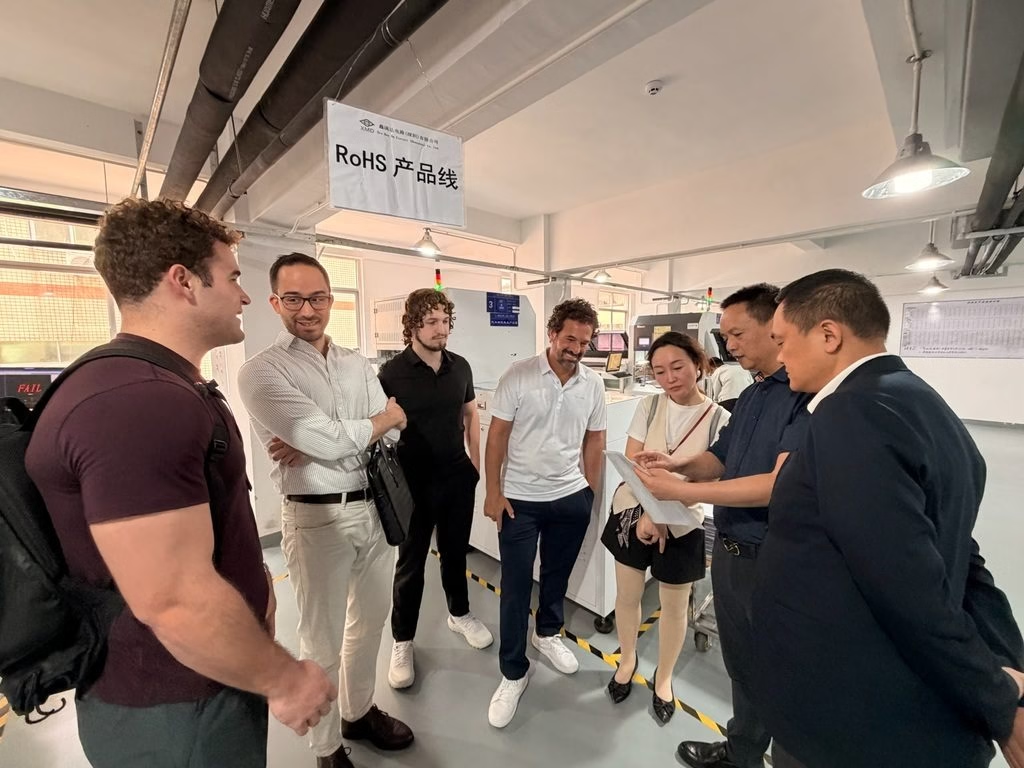
4. How to Get to the Canton Fair: Transport, Logistics and Accommodation
The fastest and most reliable route to the Canton Fair for most international buyers is Metro Line 8 to Pazhou Station or Xingang East Station — both exits lead directly to the Pazhou Complex entrance. The metro is affordable, air-conditioned, and avoids the severe traffic congestion that surrounds the complex during peak fair days.
Getting to the Canton Fair Pazhou Complex — Transport Options Compared
| Transport Method | Starting Point | Journey Time | Estimated Cost | Best For |
|---|---|---|---|---|
| Metro Line 8 | Anywhere on Guangzhou metro network | Varies by origin; ~20 min from city centre | CN¥3–8 (≈US$0.40–1.10) | Most visitors — fastest, cheapest, most reliable |
| DiDi (ride-hailing) | Anywhere in Guangzhou | 20–60 min (traffic-dependent) | CN¥30–80 (≈US$4–11) | Buyers with heavy samples or luggage; early morning before metro rush |
| Taxi | Hotel or Guangzhou city | 20–60 min (traffic-dependent) | CN¥40–100 (≈US$5.50–14) | Convenience when DiDi is unavailable; ensure meter is running |
| High-speed rail + Metro (from Hong Kong) | Hong Kong West Kowloon Station | ~60 min rail to Guangzhou South, then ~30 min metro to Pazhou | HK$250–400 rail (≈US$32–51) + metro | International buyers transiting via Hong Kong — the most common international route |
| Airport bus + Metro (from Baiyun Airport) | Guangzhou Baiyun International Airport | ~60–90 min total | CN¥25–30 bus (≈US$3.50–4) + metro | Budget-conscious buyers arriving direct to Guangzhou |
Source: InfluChina estimates, 2026; fares are approximate and change often, so check current fares before you travel.
A note on accommodation: hotels near the Pazhou Complex and along Metro Line 8 book out 6+ months in advance during fair season. If you are planning to attend, lock in your accommodation as soon as your registration is confirmed. Staying within walking distance of the complex eliminates commute time — a meaningful advantage when you are covering 30+ booths per day. DiDi (China’s primary ride-hailing platform, equivalent to Uber) is a convenient alternative for sample-heavy days or evening returns to hotels outside the Pazhou area.
5. Before You Arrive: How to Prepare for the Canton Fair
Pre-fair preparation is the biggest content gap in every Canton Fair guide on the internet — and the biggest determinant of sourcing success. Buyers who arrive with a researched exhibitor shortlist consistently outperform those who plan to "walk and see." At 1.55 million square metres, unplanned exploration is a strategy for exhaustion, not sourcing.
What Is Canton Fair 365 and Can You Attend the Canton Fair Online?
Canton Fair 365 is the year-round online exhibition platform maintained by the Canton Fair organizers, allowing international buyers to source products and contact exhibitors outside of the twice-yearly in-person event. It was launched during the COVID-19 period and retained permanently as a core feature of the Canton Fair ecosystem.
- What you can do: Browse exhibitor catalogues by product category, send RFQs (requests for quotation), contact suppliers directly, and save exhibitor shortlists for your next in-person visit
- What it is not: A replacement for the in-person fair — Canton Fair 365 is a sourcing research and supplier communication tool, not a live exhibition substitute
- How to access it: Via cantonfair.org.cn — available year-round with no registration fee for overseas buyers already registered on the platform
- Best use case: Use Canton Fair 365 in the months before the fair to identify which exhibitors are worth prioritising in person, and to send initial enquiries before you arrive
How to Use the Canton Fair App Before You Arrive
The Canton Fair app (official mobile application, available on iOS and Android) allows buyers to search exhibitors by product category, map booths interactively, and schedule appointments before arriving at the Pazhou Complex. Given the scale of the venue, using the app to pre-plan is not optional — it is essential.
Here is how to set it up before your visit:
- Download the app: Search "Canton Fair" on the App Store or Google Play — use the official app only
- Log in: Use your cantonfair.org.cn buyer account credentials
- Search by category: Filter exhibitors by your product category and phase
- Build your shortlist: Save 20–30 target booths per day — this is a realistic and productive daily target
- Map your route: Use the interactive floor map to group nearby booths and minimise walking time between meetings
- Book appointments: Use the in-app scheduling tool to pre-confirm meetings with high-priority exhibitors
The app also functions as a post-show contact manager — saving exhibitor details and notes from each booth visit for follow-up after the fair.
What to bring on fair days:
- Business cards: Bring significantly more than you think you need — exchanging cards is standard practice and signals professionalism to Chinese suppliers. Receive cards with both hands and take a moment to read them before putting them away
- Mobile phone: With WeChat and Alipay set up before arrival (see Section 6)
- Portable charger: A full fair day is 8+ hours; your phone will not survive without one
- Comfortable shoes: Non-negotiable at 1.55 million square metres
- Printed exhibitor shortlist: As a backup when Wi-Fi or mobile data is unstable
Consider a guided Canton Fair sourcing trip if this is your first visit — having a bilingual team member with you dramatically changes the quality of booth conversations.
6. Your Digital Toolkit: WeChat, Alipay and Other Apps for the Canton Fair
China operates on a distinct digital ecosystem that differs substantially from Western markets. Three apps are non-negotiable for any Canton Fair buyer: WeChat, Alipay, and the Canton Fair app covered in Section 5. Set all three up before you board your flight to Guangzhou.
WeChat at the Canton Fair
WeChat (Tencent’s all-in-one messaging, payment, and social platform) is the primary communication channel between international buyers and Chinese suppliers — both at the fair and after it. Understanding how to use it at booths is a practical skill that separates experienced buyers from first-timers.
- Scanning exhibitor QR codes: Most booths display a WeChat QR code. Scanning it connects you instantly with the supplier’s WeChat account and often delivers a digital product catalogue — faster than exchanging paper catalogues
- Adding suppliers on WeChat: Ask "Can we connect on WeChat?" after a substantive conversation — not as an opening line. This signals you are a serious buyer, not just browsing
- Post-fair communication: WeChat is where the real negotiation happens. Suppliers respond to WeChat messages faster than email — often within hours
For brands considering a deeper China presence, our WeChat marketing and WeChat Official Account services extend well beyond sourcing. Understanding China’s Chinese social media apps ecosystem and digital marketing in China is increasingly important for brands who want to sell into China, not just source from it.
Alipay for Foreign Visitors in 2026
As of 2024, foreign nationals visiting China can link international credit cards (Visa, Mastercard) directly to Alipay using their overseas phone number and passport. This policy update means foreigners no longer need a Chinese bank account to use mobile payments in China.
- How to set it up: Download Alipay, register with your overseas phone number, and follow the "International User" card-linking flow in the app
- Where it works: Restaurants, convenience stores, hotels, and transport around the Pazhou Complex all accept Alipay
- Cash: Carry a small amount of CN¥ (Chinese Yuan / Renminbi) for older vendors or street food stalls near the complex that may not accept mobile payment
- WeChat Pay: Also supports international card linking via a similar process — either platform works for daily expenses at and around the fair
Translation and VPN Apps
Google Translate’s camera function — which translates text in real time through your phone camera — is invaluable for reading Chinese product labels and signage at the Pazhou Complex. However, Google services (including Translate, Maps, and Gmail) are blocked in mainland China and require a VPN to access. Download and activate your VPN before you cross into mainland China, as VPN app stores are also restricted once you are inside the firewall.
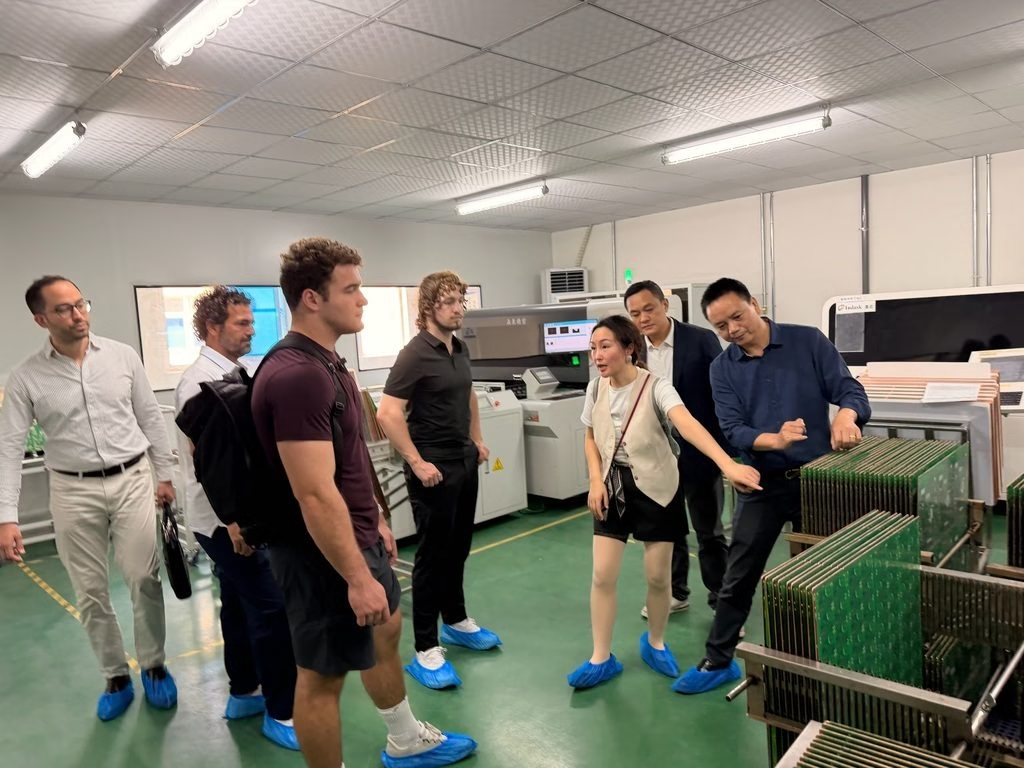
7. How to Evaluate Suppliers at the Canton Fair: A Sourcing Strategy Framework
The Canton Fair is not a passive browsing experience — it rewards buyers with a structured evaluation framework. The most important strategic skill you can develop before attending is the ability to quickly assess whether an exhibitor is worth your time, and whether they are capable of meeting your actual requirements.
Factory vs. Trading Company: How to Tell the Difference at the Canton Fair
At the Canton Fair, not all exhibitors are manufacturers — many are trading companies presenting products sourced from multiple factories. A trading company is a middleman entity that typically has higher prices, less flexibility on customisation, and cannot provide direct factory audit access. For buyers seeking direct factory pricing, identifying this distinction early is critical.
Key on-site signals that distinguish a factory from a trading company:
- Product range depth vs. breadth: Factories typically present a narrow but technically deep product range. Trading companies often display a broad multi-category catalogue spanning unrelated product types — a single exhibitor selling both kitchen appliances and outdoor furniture is almost certainly a trading company
- Staff technical knowledge: Factory staff can answer detailed questions about manufacturing processes, tolerances, and materials. Trading company staff tend to defer or give vague answers on production specifics
- Factory visit willingness: Ask directly: "Can I arrange a factory visit?" Factories will say yes and give you a location. Trading companies often cannot — or will propose a visit to "one of our partner factories"
- Sample availability: Factories typically have samples of their own production on display. Trading companies may have samples from multiple third-party suppliers
- The direct question: Ask "Is this your factory?" — the answer itself is useful data. Evasive or indirect responses are informative
The 8 Questions to Ask at Every Canton Fair Booth
These eight questions should be asked at every booth you visit at the Canton Fair — they create a consistent evaluation framework that makes supplier comparison far more objective after the fair ends.
- What is your minimum order quantity (MOQ)? — Establishes whether the supplier is viable for your current order scale; some factory MOQs are too high for small brands
- Where is your factory located? — Factories in the Pearl River Delta (Guangdong) offer faster lead times than those in Zhejiang or Fujian; location also affects logistics costs
- Can I arrange a factory visit? — The willingness and speed of the answer reveals whether you are speaking with a manufacturer or a middleman
- What quality certifications do you hold? — Ask for CE, RoHS, ISO, FDA or category-specific certifications relevant to your market; request copies, not verbal assurances
- What are your standard payment terms? — Typical terms are 30% deposit + 70% before shipment; be cautious of unusual payment structures from unknown suppliers
- What is your sample cost and lead time? — Samples are rarely free; understanding the cost and timeline sets expectations for your post-fair workflow
- What are your largest export markets? — Suppliers with established export experience to your target market understand compliance requirements; those without may not
- Can I speak with your factory manager or technical lead? — The response to this question quickly separates sales representatives from decision-makers
8. After the Canton Fair: Your Follow-Up Playbook
The 48 hours after the Canton Fair closes are the most important window for supplier follow-up — response rates tend to fall once exhibitors return to their factories and regular operations. Most buyers do nothing in this window. That is a costly mistake.
WeChat Follow-Up in the First 48 Hours
Send your initial follow-up message via WeChat — not email. Chinese suppliers check WeChat constantly; email is a secondary channel. A strong first message includes:
- A specific reference to the products you discussed at the booth — not a generic "nice to meet you"
- Your requirements summary: Product specification, target MOQ, target price range, and required certifications
- A clear next step: "Please send a formal quotation (proforma invoice) for the items below"
- Your timeline: When you need to place an order — this signals seriousness and creates urgency
Requesting Formal Quotations
A proper proforma invoice from a Canton Fair supplier should include all of the following. If a supplier’s quotation is missing these elements, request them explicitly before proceeding:
- Unit price in USD (or agreed currency) per SKU
- Minimum order quantity (MOQ) per SKU
- Lead time from order confirmation to shipment-ready
- Payment terms (deposit percentage, balance timing)
- Incoterms (FOB, CIF, EXW — defines who bears shipping responsibility and cost)
- Sample cost and lead time
- Quotation validity period (typically 30 days)
How to Verify a Supplier After the Fair
Supplier verification is a non-negotiable step before placing any first order. Use these three methods after the Canton Fair:
- SAMR business registration check: The State Administration for Market Regulation (SAMR) maintains China’s National Enterprise Credit Information Publicity System. Search your supplier’s company name at gscloud.cn to verify their registration status, legal representative, and registered capital
- Export licence request: Ask for a copy of the supplier’s export licence (外贸经营者备案登记). Legitimate exporters have this on file
- Factory audit: For first orders above a meaningful value threshold, commission a third-party factory audit — typically conducted by inspection firms in China — before committing to payment
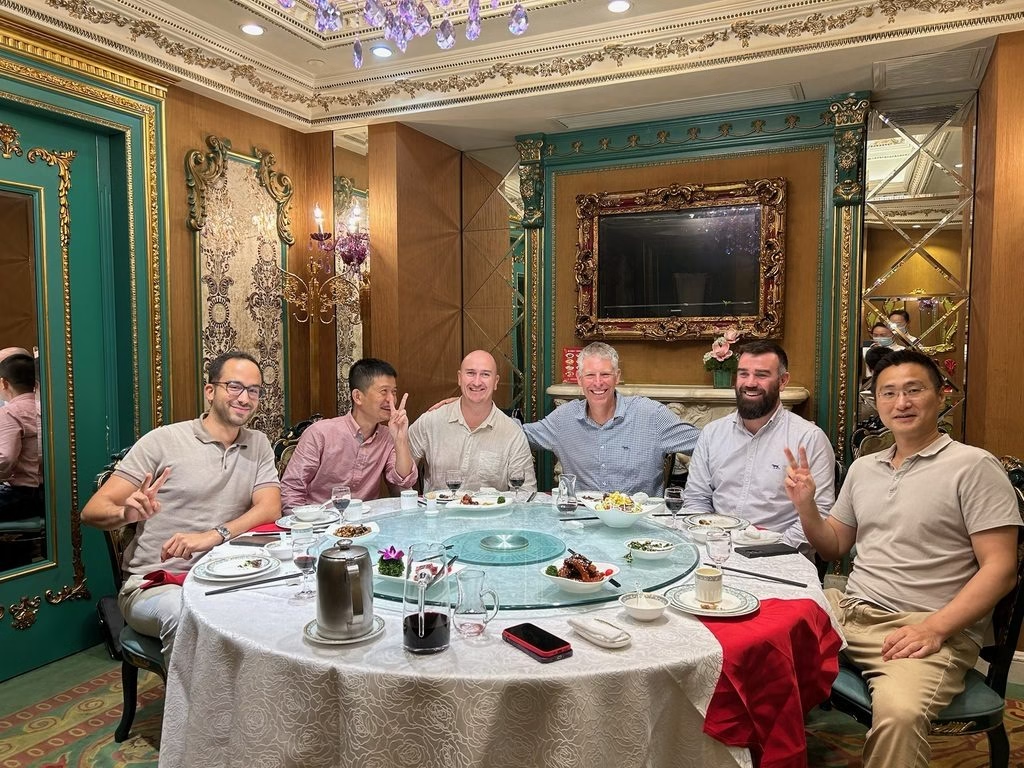
Need Help Vetting Canton Fair Suppliers? Speak with InfluChina’s Sourcing Team
9. Canton Fair vs. Other China Sourcing Options
The Canton Fair is the world’s largest trade fair, but it is not the only option for buyers sourcing from China — and for some product categories or business models, an alternative route may be more efficient. Understanding where the Canton Fair sits within the broader China sourcing landscape is part of a smart China market entry strategy.
Canton Fair vs Other China Sourcing Options — Which Is Right for You?
| Sourcing Option | Location | Product Focus | Frequency | Format | Best For |
|---|---|---|---|---|---|
| Canton Fair (in-person) | Guangzhou, Guangdong | All categories — phased by industry | Twice yearly (Spring/Autumn) | In-person | Meeting manufacturers directly; first-time China sourcing; broad category coverage |
| Canton Fair 365 | Online (cantonfair.org.cn) | All Canton Fair categories | Year-round | Online | Pre-fair research; sourcing between fair dates; sending RFQs without travelling |
| Yiwu International Trade Market | Yiwu, Zhejiang | Small commodities, gifts, toys, textiles, accessories | Year-round (permanent market) | In-person | Ready-made commodity goods with low MOQs; buyers who need variety and immediate availability |
| Global Sources | Hong Kong (Asia World-Expo) | Electronics, mobile/tech accessories, fashion | Twice yearly (April and October) | In-person + Online | Electronics buyers preferring Hong Kong base; avoiding mainland China visa |
| HKTDC Hong Kong Fairs | Hong Kong Convention Centre | Gifts, home products, electronics, fashion | Multiple events per year | In-person + Online | Buyers seeking Hong Kong-based trade fair experience; no mainland China visa required |
Source: InfluChina analysis; details verified against official venue and organiser websites.
Many experienced buyers treat the Canton Fair as the anchor of a longer Pearl River Delta sourcing circuit. A typical extended itinerary might include:
- Canton Fair (Guangzhou): 3–5 days across one or two phases
- Shenzhen Huaqiangbei electronics market: 1–2 days for electronics buyers — the world’s densest electronics components district
- Factory visits (Pearl River Delta): 1–3 days visiting shortlisted suppliers identified at the fair
For brands also considering cross-border eCommerce in China or selling in China, the Canton Fair sourcing circuit naturally connects with a broader market entry strategy — not just an outbound sourcing trip.
The Canton Fair is not just the world’s biggest trade fair — it is an annual benchmark for the state of Chinese manufacturing. The product innovations on display at each edition reflect what China’s factories are capable of producing right now. For serious importers, attending at least once a year is not optional; it is market intelligence.
How InfluChina Helps International Buyers at the Canton Fair
InfluChina’s China Sourcing Trips are built specifically for international buyers attending the Canton Fair and broader Pearl River Delta sourcing circuits. With 6+ years of China business experience and 400+ campaigns supporting international brands in China, our team operates from inside China — not from a marketing agency in London or Sydney.
What a guided Canton Fair sourcing trip with InfluChina includes:
- Pre-fair exhibitor shortlisting: Our bilingual team researches Canton Fair 365 and the official exhibitor directory to build a curated booth list matched to your product category and sourcing criteria
- On-the-ground support during fair days: Bilingual team members accompany you on the floor, facilitate supplier conversations, and help you evaluate factory vs. trading company signals in real time
- Supplier meeting scheduling: We pre-book appointments with high-priority exhibitors so you are not cold-walking booths
- Post-fair follow-up coaching: We help you structure your WeChat follow-up messages, review quotations, and identify which suppliers warrant factory audits before committing to orders
Beyond sourcing trips, InfluChina also organises guided China business tours and corporate delegations to China for enterprise teams. Whether you are attending as an individual buyer or leading a procurement delegation, our team structures the visit around your business objectives.
Schedule a Free Consultation to Plan Your Canton Fair Sourcing Trip
Ready to Make Your Canton Fair Visit Count?
The Canton Fair is the world’s most comprehensive sourcing event, but success depends on strategic preparation rather than simply attending. Buyers who use the Canton Fair app, understand the three phases, and apply a structured supplier evaluation framework consistently source better — and faster.
The logistics are the easy part. Knowing which phase matches your product category, how to spot a trading company at a glance, and what to do in the 48 hours after the fair closes — that is where the real advantage is built. If you want support planning your visit, InfluChina’s Canton Fair sourcing trip support is designed exactly for this. For brands also thinking about their broader China marketing strategy, we can help with that too.
Download Our Free China Marketing eBook — Start Planning Your China Market Entry Today
