
Company Visits in China: Access, Cities & How to Arrange | InfluChina
Company visits in China are structured executive programmes that grant foreign delegations direct access to Chinese companies — from tech giants like Huawei and Alibaba to EV leaders like BYD — for first-hand market intelligence. As of 2025, China is fully open to international business visitors, but access to top-tier firms is not publicly bookable. It requires facilitation through an established intermediary with existing relationships. InfluChina organises bespoke China business tours — corporate delegations, trade missions, investor tech tours, and business school study tours — combined with post-visit China marketing strategy.
Table of Contents
1. What Is a China Corporate Study Tour — And How Does It Differ from a Trade Mission?
A China corporate study tour is a structured programme in which a foreign executive delegation visits two or more Chinese companies within a single trip, with the purpose of gathering first-hand market intelligence, benchmarking against Chinese innovation, and building business relationships — typically lasting three to five days and facilitated by a specialist intermediary.
That definition matters, because "corporate study tour," "trade mission," "corporate delegation," and "sourcing trip" are frequently used interchangeably — but they are meaningfully different formats with different purposes, audiences, and outcomes.
Corporate Visit vs. Trade Mission vs. Study Tour vs. Sourcing Trip
| Format | Purpose | Typical Group Size | Typical Duration | Who Organises It | Best For |
|---|---|---|---|---|---|
| Corporate Study Tour | Market intelligence & benchmarking | 4–12 executives | 3–5 days | Specialist agency (e.g. InfluChina) | Brand leaders, strategy teams, innovation officers |
| Trade Mission | Bilateral trade promotion & investment | 10–30 delegates | 5–10 days | Government body or chamber of commerce | SME exporters, policy-facing executives |
| Corporate Delegation | Senior-level relationship building | 3–12 executives | 3–7 days | Specialist agency or directly by the company | C-suite and VPs seeking strategic partnerships |
| Sourcing Trip | Supplier identification & procurement | 1–6 buyers | 3–10 days | Trade agency or self-arranged | Procurement teams, product developers |
Source: InfluChina, based on 25+ expeditions delivered.
The clearest distinction: a trade mission is government- or chamber-led and focuses on bilateral trade objectives, while a corporate study tour is privately organised and company-specific. A corporate delegation is a formal executive group from a single organisation — typically seeking senior-level dialogue rather than broad market exposure. China sourcing trips, by contrast, are procurement-focused and rarely include the strategic company briefings that define a study tour.
Who Arranges Corporate Visits to Chinese Companies?
Corporate visits to top-tier Chinese companies are arranged through three types of intermediaries: specialist China business tours agencies, bilateral chambers of commerce, and government trade bodies. Most top-tier Chinese companies — including Huawei, Alibaba, and ByteDance — require introduction through established intermediaries or trade associations. Cold outreach from an unknown foreign company rarely succeeds. A specialist facilitator uses its existing network with Chinese companies, trade associations, and government contacts to secure formal meeting invitations that simply are not available to external parties making direct approaches.
Arrange Your China Corporate Visit
2. Which Chinese Companies Can You Actually Visit?
Yes, foreign executives can visit leading Chinese companies — but access to top-tier firms like Huawei, Alibaba, and BYD is not publicly bookable. It requires facilitation through an established intermediary with existing relationships. Below is an overview of the major companies accessible to foreign corporate delegations, organised by sector.
Chinese Companies Open to Foreign Corporate Visits
| Company | Sector | Headquarters City | Why Visit | Access Level |
|---|---|---|---|---|
| Huawei | Technology | Shenzhen | 5G, AI, consumer electronics, R&D ecosystem | Facilitated |
| Alibaba | eCommerce & Cloud | Hangzhou | Tmall, Taobao, Alibaba Cloud, digital commerce infrastructure | Facilitated |
| BYD | Electric Vehicles | Shenzhen | EV manufacturing, battery technology, vertical integration | Facilitated |
| ByteDance | Technology & Media | Beijing | Douyin, TikTok, AI-driven content algorithms | Facilitated |
| DJI | Hardware & Drones | Shenzhen | Consumer and enterprise drone innovation | Facilitated |
| JD.com | eCommerce & Logistics | Beijing | Supply chain, logistics automation, B2C commerce | Facilitated |
| CATL | Green Energy | Ningde | EV battery leadership, energy storage technology | Facilitated |
| NIO | Electric Vehicles | Shanghai | Premium EV brand strategy, battery swap network | Facilitated |
| Xiaomi | Technology | Beijing | Consumer electronics, smart home ecosystem, EV | Open / Facilitated |
| Tencent | Technology & Gaming | Shenzhen | WeChat ecosystem, gaming, fintech, cloud | Facilitated |
Source: Based on InfluChina facilitation experience; access levels may vary by delegation type and timing, 2025
Technology and Innovation: Huawei, Xiaomi, DJI, ByteDance
China’s technology sector offers some of the most compelling company visits available anywhere in the world. A visit to Huawei’s Shenzhen campus reveals the scale of its R&D investment, 5G infrastructure, and consumer ecosystem. DJI’s headquarters offers insight into hardware innovation and global product development from a company that commands more than 70% of the global consumer drone market. ByteDance in Beijing is essential for any executive trying to understand algorithm-driven content commerce and the Douyin ecosystem. Xiaomi’s flagship stores and Beijing campus are among the more accessible entry points — a good starting option for delegations new to China visits.
eCommerce and Digital Platforms: Alibaba, JD.com, Pinduoduo, Meituan
Visiting China’s eCommerce giants is uniquely valuable for international brands — because no Western market replicates the scale, speed, or integration of China’s digital commerce ecosystem. The Alibaba campus in Hangzhou provides direct exposure to Tmall, Taobao, Alibaba Cloud, and Ant Group’s fintech operations. JD.com’s Beijing base demonstrates logistics automation and supply chain excellence. Pinduoduo’s social commerce model and Meituan’s on-demand economy offer windows into consumer behaviour that no desk research can replicate. Before any of these visits, understanding the China eCommerce ecosystem is essential preparation — the executives who arrive platform-literate extract dramatically more value from every meeting. See also our guide to cross-border eCommerce China for context on how these platforms serve international brands.
Electric Vehicles and Green Energy: BYD, CATL, NIO, SAIC
EV and green energy company visits are the fastest-growing category of corporate interest among Western executives in 2025. A BYD factory visit in Shenzhen reveals end-to-end vertical integration — from battery cells to finished vehicles — that no Western automotive company currently matches. CATL’s Ningde headquarters is the epicentre of global EV battery technology. NIO’s Shanghai base showcases premium EV brand strategy combined with a subscription battery model that is entirely without Western precedent. SAIC in Shanghai adds an important perspective on the state-enterprise side of China’s automotive transformation.
Why You Cannot Simply Book a Visit to Huawei or Alibaba
The access barrier to top-tier Chinese companies is real, and it pays to understand it honestly. China’s leading firms — Huawei, Alibaba, ByteDance, BYD — operate within layered corporate protocols that prioritise relationship-based access over open-door policies. IP sensitivity is significant: R&D areas, production lines, and algorithm infrastructure are protected environments. Most visits require formal endorsement through a trade association, chamber of commerce, or an established facilitator with existing relationships inside the company. In the current 2024–2025 geopolitical context, Western executives visiting certain technology companies should discuss sensitivity considerations with their facilitator in advance. Cold outreach from an unknown organisation rarely results in a confirmed visit invitation — and when it does, the access granted is typically surface-level.
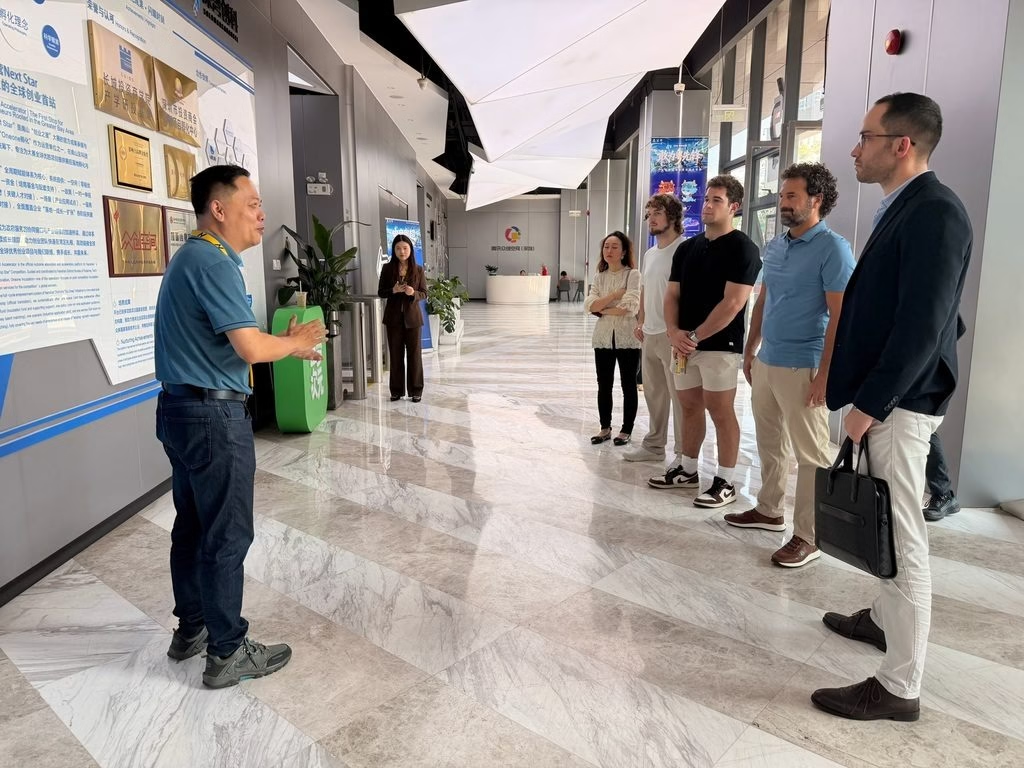
3. Which Chinese Cities Are Best for Corporate Visits?
The four primary destinations for corporate visits in China are Shenzhen (technology and hardware), Hangzhou (eCommerce and digital economy), Shanghai (automotive, consumer brands, and corporate HQs), and Beijing (AI, policy-adjacent companies, and platform giants). Each city has a distinct industry profile that should drive your itinerary design.
China’s Top Cities for Corporate Visits
| City | Key Companies to Visit | Industry Focus | Visit Complexity | Best For |
|---|---|---|---|---|
| Shenzhen | Huawei, DJI, BYD, Tencent | Tech, Hardware, EV | High | Innovation benchmarking, hardware, deep tech |
| Hangzhou | Alibaba, Ant Group, Alibaba Cloud, NetEase | eCommerce, Digital Economy | High | Digital commerce, brand eCommerce strategy |
| Shanghai | NIO, SAIC, L’Oreal China, Tesla China | Automotive, Consumer, Corporate HQs | Medium | International brands, automotive, consumer goods |
| Beijing | ByteDance, Baidu, JD.com, Xiaomi | AI, Platforms, Government-Adjacent | High | AI strategy, policy context, platform ecosystems |
| Chengdu | Tencent offices, local game studios | Gaming, Tech | Medium | Gaming industry, western China market access |
| Guangzhou | FMCG manufacturers, beauty brands | Manufacturing, Beauty, FMCG | Low–Medium | Consumer goods, supply chain, beauty sector |
Source: InfluChina China Business Tours analysis, 2025
Shenzhen — China’s Hardware and Deep-Tech Innovation Hub
Shenzhen is the single most popular destination for tech-focused corporate visits in China — and with good reason. Huawei’s campus, DJI’s headquarters, BYD’s factory, and Tencent’s offices are all within reach of a single city itinerary. The city’s manufacturing ecosystem, hardware supply chain, and innovation culture make it an unmatched destination for executives benchmarking against Chinese deep-tech development. For any delegation with a technology, hardware, or EV mandate, Shenzhen should anchor your itinerary.
Hangzhou — The eCommerce and Digital Economy Capital
Hangzhou is the spiritual and operational home of China’s eCommerce economy. Alibaba Group’s campus — one of the most impressive corporate environments in Asia — houses Tmall, Taobao, Alibaba Cloud, and Ant Group across a sprawling innovation district. NetEase’s headquarters adds a gaming and digital media dimension. For international brands developing a China market entry strategy, a Hangzhou visit is arguably the single highest-value day you can spend in China. No briefing document substitutes for walking Alibaba’s live commerce infrastructure.
Shanghai — Corporate Headquarters, Automotive, and Consumer Brands
Shanghai serves as China’s international business gateway and the regional headquarters for many multinational corporations. NIO’s experience centres and corporate offices offer a premium EV brand perspective, while SAIC provides the state-enterprise automotive view. L’Oreal China and other consumer multinational HQs make Shanghai essential for FMCG, beauty, and luxury brand executives trying to understand how global brands localise for Chinese consumers. Shanghai’s international connectivity and English-language business environment also make it the lowest-friction starting point for first-time China visitors.
Beijing — AI, Government-Adjacent, and Platform Giants
Beijing is where China’s technology and policy ecosystems intersect. ByteDance’s headquarters offers a window into the algorithmic architecture behind Douyin and global content commerce. Baidu’s AI and autonomous vehicle development, JD.com’s logistics and eCommerce operations, and Xiaomi’s smart home ecosystem are all headquartered here. For executives whose mandate includes understanding AI strategy, government-adjacent technology policy, or platform-level business models, Beijing provides access that no other city can match.
Beyond the Big Four: Chengdu, Guangzhou, and Wuhan
China’s innovation landscape extends well beyond the headline cities. Chengdu has emerged as a major gaming and technology hub, with Tencent offices and a thriving independent game studio scene that is worth including for media and entertainment executives. Guangzhou is the operational centre for FMCG manufacturing, beauty supply chains, and consumer goods production — relevant for procurement teams and brand sourcing visits. Wuhan carries strategic importance for automotive, with a significant presence of both Chinese and joint-venture car manufacturers that makes it relevant for the mobility sector.
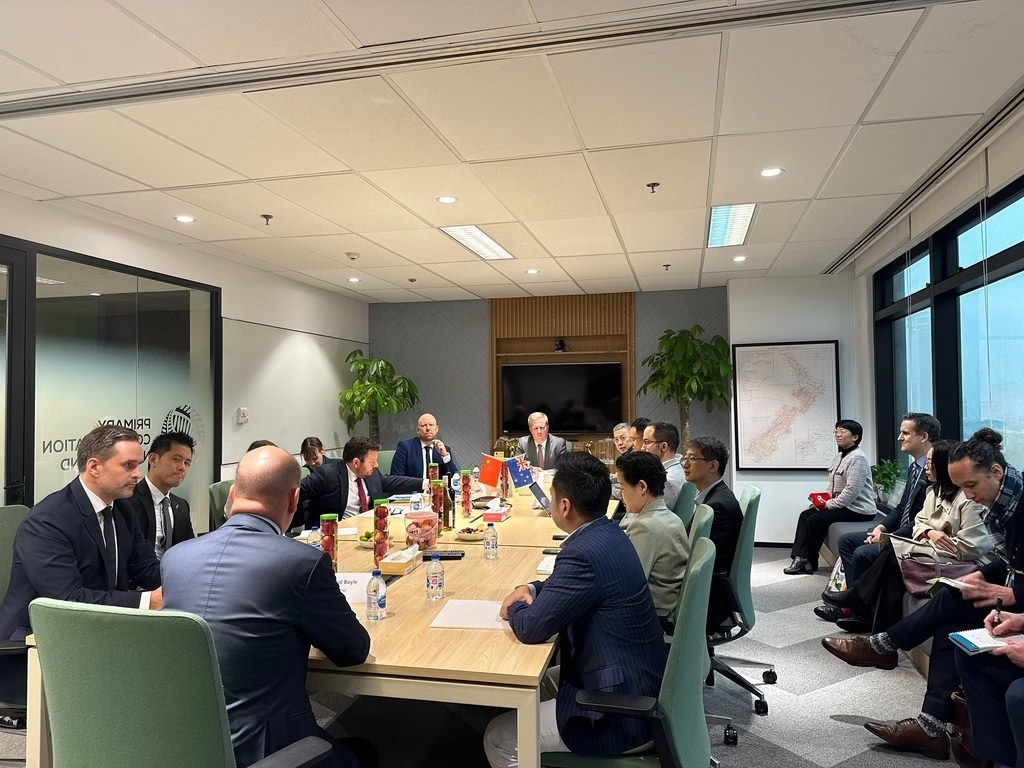
4. What Happens During a China Corporate Visit — And What Access Should You Expect?
China corporate visits typically take one of three formats: executive roundtables, facility and lab tours, or expert briefings. Access levels vary significantly by company tier and visit type — most top-tier Chinese companies restrict photography in R&D areas and require NDAs for technical facility tours. Understanding what format you are entering determines how you prepare your questions and your delegation composition.
China Corporate Visit Formats Compared
| Format | Duration | Ideal Audience | Access Level | What You Typically Learn | Typical Participant Count |
|---|---|---|---|---|---|
| Executive Roundtable | 2–3 hours | C-suite, VPs, strategy leads | High — senior dialogue | Strategy, market positioning, partnership appetite | 4–10 |
| Facility & Lab Tour | 3–5 hours | Operations, R&D, product teams | Medium — curated areas only | Manufacturing process, innovation pipeline, scale | 6–15 |
| Expert Briefing | 1.5–2.5 hours | Broader delegations, sector researchers | Medium — presentation format | Market strategy, sector trends, platform data | 8–25 |
| C-Suite Dialogue | 1–2 hours | Senior leadership, subject to the host’s availability | Very High — by invitation only | Strategic direction, partnership frameworks | 2–6 |
Source: InfluChina China Business Tours service formats, 2025
Executive Roundtables and C-Suite Dialogues
Executive roundtables are structured discussions between a senior foreign delegation and their Chinese company counterparts — typically at VP level or above. The format is conversational rather than presentational, making pre-visit preparation of specific questions essential. Chinese hosts will often present first before opening to dialogue, so understanding the company’s current strategy and market position in advance is critical. Corporate delegations to China that invest in pre-briefing sessions consistently report significantly richer roundtable outcomes. Bring senior titles that match your Chinese counterparts — hierarchy alignment signals respect and determines the seniority of who enters the room.
Facility and Lab Tours
Facility and lab tours offer direct observation of manufacturing processes, R&D environments, and technology infrastructure. The access granted is curated — all major Chinese tech companies restrict photography in R&D zones, production lines, and server facilities. NDA agreements are standard for any tour that enters technical areas. What delegates typically see includes showroom-standard production areas, innovation showcases, and product demonstration facilities. The value lies less in seeing secret technology and more in experiencing the operational scale — the sheer size of a BYD factory or an Alibaba data centre communicates something no slide deck can convey.
Expert Briefings and Market Intelligence Sessions
Expert briefings are the most scalable visit format — a Chinese company representative presents on market strategy, platform performance, or technology direction, followed by a Q&A session. This format works well for larger delegations of 10–25 people and is particularly valuable for eCommerce and platform companies where strategic data (user counts, GMV trends, category growth) is the primary deliverable. Interpretation quality is a critical variable: a mediocre interpreter neutralises the value of an excellent briefing. Always confirm your facilitator’s interpretation standard — consecutive interpretation by a subject-matter expert, not a generalist language graduate, is the appropriate standard for executive-level briefings.
5. How to Arrange a Company Visit in China: A Step-by-Step Process
Arranging a corporate visit to a major Chinese company typically takes 4–12 weeks depending on company tier and format. Top-tier companies like Huawei, Alibaba, and ByteDance require the longer end of that timeline due to internal approval processes. The process involves six stages, each of which requires specific decisions and actions.
- Define your visit objectives: Clarify what market intelligence you need and what business decisions the visit will inform. The clearer your objective, the more precisely a facilitator can match you with the right companies, format, and level of access. Vague objectives produce surface-level visits.
- Select your target companies and sectors: Based on your objectives, identify three to six target companies across one or two sectors. Prioritise companies that are strategically relevant to your category — not just the most famous names. Your facilitator will advise on which companies are currently accessible and which formats are realistic.
- Design your city itinerary: Map your target companies to cities. Shenzhen for tech and EV, Hangzhou for eCommerce, Beijing for AI and platforms, Shanghai for automotive and consumer brands. A multi-city programme of three to five days typically allows two to three company visits per city.
- Engage a China visit facilitator: This is the most consequential step. Cold outreach to top-tier Chinese companies rarely succeeds — most require introduction through an established intermediary. A specialist China marketing strategy partner with existing company relationships secures invitations and manages the protocol requirements that determine whether access is granted at all.
- Prepare your delegation: Brief your team on each company’s business model, market position, and digital ecosystem before departure. Assign specific question areas to individual delegates. Address cultural protocols, photography rules, and NDA expectations. Executives who arrive prepared ask better questions and generate more valuable dialogue.
- Execute visits and conduct a structured debrief: On-the-ground facilitation matters — agenda management, real-time interpretation, and relationship management during visits all affect outcomes. After your final visit, conduct a structured debrief to capture insights before they fade. Ideally, this debrief feeds directly into a China market entry or marketing strategy session.
The 4–12 week lead time is not bureaucratic delay — it reflects the genuine relationship-building and internal approval processes required by Chinese companies to host senior foreign delegations. Plan accordingly.
6. How to Prepare for a Company Visit in China
Effective preparation for a China corporate visit covers three dimensions: cultural intelligence, digital ecosystem literacy, and practical logistics. Executives who arrive knowing how Douyin commerce or WeChat Pay works ask dramatically better questions and extract more strategic value from every meeting. Preparation is not optional — it is the factor that separates a productive delegation from a very expensive tourism exercise.
Chinese Corporate Culture: What First-Time Visitors Need to Know
Chinese corporate culture follows protocols that differ meaningfully from Western business norms. Understanding these before your visit determines the quality of relationships you build.
- Hierarchy alignment: Always match the seniority of your delegation to your Chinese hosts. Sending a junior team to meet a VP-level host signals disrespect.
- Business card etiquette: Present and receive business cards with both hands, take a moment to read the card before putting it away. Never write on it or leave it on the table.
- Punctuality: Arrive slightly early. Chinese hosts expect punctuality as a baseline signal of respect — being late is a meaningful reputational risk.
- Photography protocols: Ask before photographing anything inside a Chinese company. Many facilities prohibit photography of production areas, server rooms, and internal offices without explicit permission.
- Interpreter quality: Confirm your facilitator provides subject-matter-expert interpretation, not generalist translation. The difference in visit quality is dramatic.
- Gift-giving context: Modest, branded gifts from your home country are appreciated in a corporate setting — avoid overly lavish gifts, which can create awkwardness around anti-corruption protocols.
Digital Ecosystem Literacy: Understanding Douyin, Tmall, and WeChat Before You Arrive
Platform literacy, in the context of preparing for a China corporate visit, means understanding the Chinese digital ecosystem — including Douyin (the Chinese version of TikTok), Xiaohongshu (also known as Rednote or Little Red Book), WeChat, Tmall, and JD.com — before meeting the companies that built or operate those platforms. Executives visiting Alibaba who have never explored a Tmall store, or those visiting ByteDance without understanding how Douyin commerce drives purchase decisions in real time, are asking questions from a position of ignorance that their Chinese hosts will notice. Review our guide to Douyin marketing strategy and WeChat marketing before your departure — both explain platform mechanics at a level that will meaningfully improve your visit dialogue. As of 2025, Douyin’s social commerce integration has accelerated significantly, making platform literacy more important than ever for brands entering China’s digital market.
Practical Logistics: Visa, WeChat Pay, Connectivity, and Cybersecurity
Practical preparation prevents avoidable disruptions that consume delegate time and attention. Address these items at least three weeks before departure:
- Chinese business visa: Secure an M-visa (commercial/trade) or F-visa (exchange/visits). Requirements vary by nationality — consult the U.S. International Trade Administration’s China business travel guide for current requirements.
- WeChat and Alipay setup: Set up WeChat Pay before arrival — it is the dominant payment method across restaurants, taxis, and retail. Cash and Western cards have limited acceptance outside major international hotels.
- Connectivity: Google, Gmail, Slack, WhatsApp, and most Western platforms are blocked in China. Install a VPN before departure and test it — configure it for both mobile and laptop.
- Cybersecurity: Use a dedicated travel device where possible when visiting sensitive technology companies. Avoid connecting to public Wi-Fi without a VPN. Be aware that NDA requirements at certain facilities may extend to devices brought into R&D areas.
- Translation tools: Download an offline Chinese-English translation app — connectivity can be intermittent in factory environments.
- Emergency contacts: Save your facilitator’s Chinese mobile number and your hotel address in Chinese characters for taxi navigation.
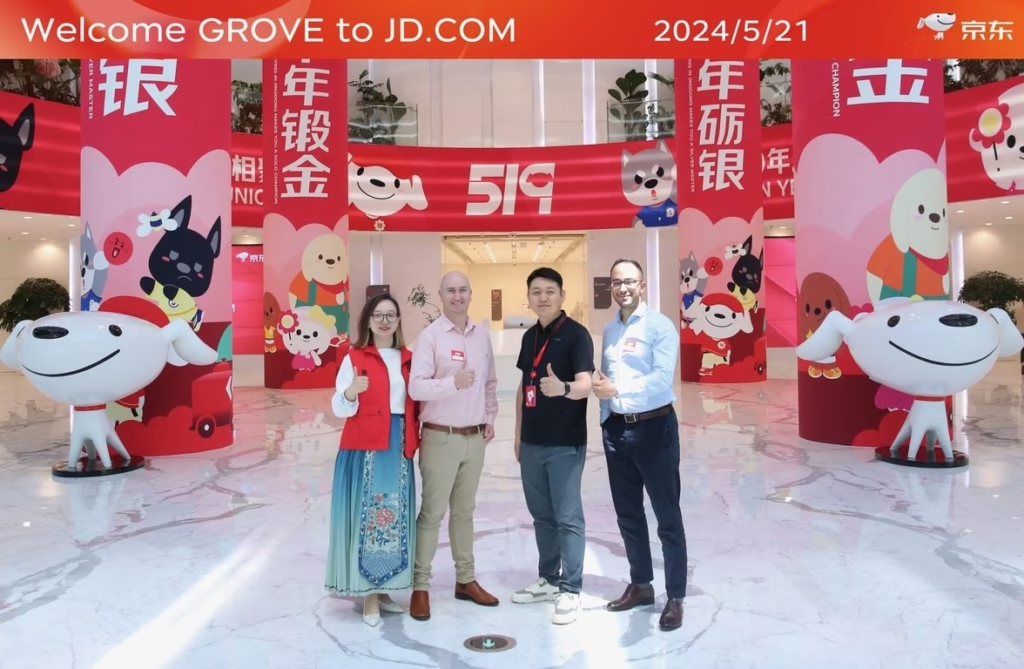
7. Sample China Company Visit Itineraries: What a Real Programme Looks Like
These sample itineraries represent the types of programmes InfluChina designs for corporate delegations. Company visits depend on each host’s availability and are confirmed per programme. Every programme is customised to client objectives — these examples illustrate structure and pacing for two of the most popular formats: a Shenzhen tech tour and a Hangzhou eCommerce immersion. Both formats are available as standalone programmes or as part of broader China business tours.
Sample Itinerary: 3-Day Shenzhen Tech Innovation Tour
- Day 1 — Arrival and pre-visit briefing: Arrive Shenzhen. Evening briefing session with your InfluChina programme director covering company backgrounds, cultural protocols, question strategy, and NDA requirements for the following days. Dinner with facilitator team to establish rapport before the visit programme begins.
- Day 2 — Huawei campus and DJI headquarters: Morning: Huawei campus visit — facility tour of innovation showrooms and an expert briefing on Huawei’s 5G and consumer ecosystem strategy. Afternoon: DJI headquarters visit — hardware innovation tour and executive briefing on global product development and distribution strategy. Evening: Shenzhen innovation district walk — visit electronics markets and hardware innovation hubs in Huaqiangbei.
- Day 3 — BYD factory tour and programme debrief: Morning: BYD facility tour — production line overview, battery technology showcase, and EV strategy briefing. Afternoon: Structured programme debrief with InfluChina team — capturing intelligence, identifying strategic implications, and mapping next steps. Departure evening or following morning.
Sample Itinerary: 4-Day Hangzhou eCommerce Immersion
- Day 1 — Arrival and Alibaba campus overview: Arrive Hangzhou. Afternoon orientation walk of Alibaba’s Xixi campus — understanding the scale and structure of the Alibaba ecosystem before formal visits begin. Evening briefing on Tmall, Taobao, Alibaba Cloud, and Ant Group’s distinct roles within the Group.
- Day 2 — Alibaba eCommerce briefing and live commerce session: Morning: Formal Alibaba briefing — eCommerce market strategy, Tmall brand entry pathways, and category performance data. Afternoon: Live Taobao and Douyin commerce observation session — watch real-time livestream commerce driving transactions, with expert commentary from your facilitator on mechanics and brand implications.
- Day 3 — Alibaba Cloud or NetEase visit and digital commerce expert briefing: Morning: Alibaba Cloud or NetEase visit — digital infrastructure, cloud adoption, or gaming and digital media perspectives depending on delegation profile. Afternoon: Independent digital commerce expert briefing — a China market specialist (separate from the host company) provides an unfiltered view of platform strategy and eCommerce trends relevant to your category. This is the session where executives ask the questions they couldn’t ask inside an Alibaba meeting room. Consider our China business school study tours for academic programme integration.
- Day 4 — Market debrief and China marketing strategy session with InfluChina: Full-day strategy session with InfluChina’s China marketing team. Map visit intelligence to specific brand actions: Tmall flagship strategy, Douyin content seeding plan, China tech tours for investors follow-up, or KOL marketing activation. This is the session that converts market intelligence into a China marketing action plan — InfluChina’s unique differentiator in the corporate visit category. Departure evening.
"There is no substitute for in-person market intelligence in China. The speed of change, the integration of digital and physical commerce, and the competitive intensity are simply not legible from desk research alone. Executives who visit come back transformed in their understanding of what is possible."
8. How InfluChina Supports Your Company Visits in China
InfluChina’s China Business Tours service organises bespoke programmes for international executives seeking direct access to China’s leading companies. Our programme portfolio covers five formats: corporate delegations to China for senior executive access, trade missions to China for chamber or association-led groups, China tech tours for investors for VC and PE firms evaluating Chinese innovation, business school study tours in China for MBA and executive education programmes, and sourcing trips for procurement teams. With 6+ years of China marketing experience via WeNomad and 400+ marketing campaigns and 25+ expeditions delivered, we have the relationships and the operational infrastructure to open doors that cold outreach cannot.
What makes InfluChina uniquely positioned is the integration that no tour operator can offer: visit facilitation combined with China marketing expertise. Your programme ends not with a farewell dinner but with a strategy session. We map your visit intelligence — what you learned about Douyin commerce at ByteDance, what the Tmall team told you about category dynamics, what the BYD factory revealed about supply chain strategy — directly onto a China marketing or market entry action plan. Our 250,000+ influencer database, certified Tmall Partner status, and social media management capability across Douyin, Xiaohongshu (also known as Rednote or Little Red Book), and WeChat mean we can move from debrief to activation without delay. Most clients leave Day 4 with a draft China digital marketing in China plan in their hands.
Get in Touch About Your China Visit
Start Planning Your China Company Visits
Company visits in China offer international executives direct, first-hand access to the companies reshaping global technology, eCommerce, and green energy — but only when arranged through the right channels. The access barrier is real, the preparation requirements are specific, and the strategic value is substantial. The executives who return from China with genuine market intelligence — not just campus photographs — are those who invested in proper facilitation, arrived platform-literate, and converted their debrief into action. InfluChina delivers all three: access, preparation, and the post-visit China marketing strategy session that turns a four-day programme into a twelve-month roadmap. Start building your understanding Chinese consumers now — and let us design the visit that brings it to life.
Download Our Free China Marketing eBook
"The companies reshaping global commerce are headquartered in China. The executives who understand them first-hand will make better strategic decisions than those who rely on reports alone."
