
Chinese tourists spend $277 billion annually on overseas travel, with food experiences being a primary motivation for 73% of travelers. Most restaurants miss this lucrative market by ignoring Chinese social media platforms. This guide covers the 3 essential platforms — Rednote (Xiaohongshu), Dianping, and Douyin — and explains why opening an official account is the #1 mistake restaurants make. Real campaign data from Barcelona restaurants shows how KOC marketing delivers nearly 1 million views across just 3 venues.
1. Understanding the Chinese Tourist Restaurant Market
Chinese tourists represent the world’s largest outbound travel market, spending $277 billion annually on overseas experiences. Food exploration drives 73% of their travel decisions, yet most restaurants completely ignore this demographic when planning their marketing strategies.
Unlike Western tourists who rely on Google reviews and Yelp, Chinese travelers operate within a completely different digital ecosystem. They discover restaurants through Chinese social media platforms where visual storytelling and peer recommendations dominate the decision-making process.
Who Are Chinese Restaurant Tourists?
- Age demographics: 65% are between 25-40 years old with higher disposable income
- Travel patterns: Prefer group dining experiences and visually striking food presentations
- Spending habits: Average 40-60$ per person for dinner, 20-30$ for lunch
- Research behavior: 89% research restaurants on Chinese platforms before traveling
How Chinese Tourists Find Restaurants Abroad
Chinese travelers follow a unique restaurant discovery journey that bypasses Western review sites:
- Rednote (Xiaohongshu) discovery: Visual content from peers drives initial inspiration on the most popular Chinese social media platforms
- Douyin video discovery: Short-form video content shows the actual restaurant experience
- Dianping verification: Detailed reviews and ratings confirm the choice and enable booking
Get Your Free Chinese Marketing Consultation
2. The #1 Mistake: Opening an Official Account
Before we dive into the three platforms, address the biggest misconception in Chinese restaurant marketing: you do not need to open an official brand account to reach Chinese tourists.
This is the most common — and most expensive — mistake international restaurants make. Restaurant owners assume that the first step on Rednote or Douyin is to create a verified business account, invest in content production, hire a Chinese content manager, and post consistently. The reality is that this path almost never produces a return that justifies the cost.
Why Official Accounts Don’t Work for Restaurants
- Low organic reach: Chinese platforms heavily throttle branded content. A restaurant’s own posts often reach only 1-3% of followers without paid promotion.
- Ongoing investment burden: An active account needs at least 3-5 posts per week, professional photography, Chinese-language copywriting, and constant community management. That’s a full-time role.
- Trust deficit: Chinese users are skeptical of brand-owned content. A restaurant promoting itself is expected; another diner praising it is convincing.
- Algorithm bias: Platforms prefer to surface authentic user content over commercial accounts in discovery feeds — the place where new diners actually find you.
The Recommended Alternative: KOC Marketing
Instead of building your own audience from zero, the proven approach is KOC (Key Opinion Consumer) marketing — getting visibility through small, authentic influencers who already have engaged Chinese followers.
KOCs are everyday Chinese consumers — expats living abroad, travel bloggers, students, food enthusiasts — who share genuine restaurant experiences with their audience. Their content feels authentic because it is authentic, and it gets dramatically more organic reach than any brand post.
There’s no better advertising than what other people say about your restaurant. A single physical visit collaboration with the right KOC can outperform six months of self-managed brand content — at a fraction of the cost.
The first instinct of every restaurant we onboard is to open an official Rednote account. Our first piece of advice is always the same: don’t. Let other people talk about you instead. That’s where Chinese trust lives.
3. The 3 Essential Chinese Platforms for Restaurant Marketing
Three platforms within the Chinese social media ecosystem cover the entire Chinese tourist restaurant discovery journey. Each one serves a different function — from initial discovery to final booking. Trying to be everywhere at once dilutes effort; understanding the function of each platform lets you allocate budget where it matters.
Platform Function Comparison
| Platform | User Base | Primary Function for Chinese Diners | Content Style |
|---|---|---|---|
| Rednote (Xiaohongshu) | 300M+ MAU | Discovery + Evaluation — users find your restaurant and decide if it’s worth visiting | Photo + caption posts with personal recommendations |
| Douyin | 750M+ MAU | Discovery — short videos surface your restaurant in feeds and local discovery | 15-60 second vertical videos with real reactions |
| Dianping | 600M+ MAU | Review Evaluation + Booking — users verify ratings and book a table | Detailed user reviews, ratings, photos, and menu information |
Source: InfluChina analysis based on 400+ restaurant campaigns, 2026.
Chinese tourists typically discover restaurants on Rednote or Douyin, evaluate the experience through KOC content, and then verify the choice on Dianping before booking. Your job is to be present and credible at each step of that journey — without paying for an empty official account.
4. Rednote Restaurant Marketing Strategy
Rednote restaurant promotion drives the highest conversion rates for international restaurants targeting Chinese tourists. The platform’s visual-first format and community-driven recommendations make it the primary discovery channel for overseas dining experiences.
Success on Rednote requires understanding that users seek authentic, shareable dining experiences — not traditional restaurant advertising. The platform algorithm rewards content that creates “bei zhong cao” moments — posts so appealing that users immediately save them and tag friends to plan a visit.
KOC Collaborations on Rednote
For international restaurants, KOC marketing on Rednote consistently outperforms anything you could post from a brand account. KOCs are real Chinese consumers whose audiences trust them — that trust transfers to your restaurant when they recommend it.
Two collaboration models work best:
- Physical visit collabs: The KOC dines at your restaurant and posts from the experience. These generate 6x more views and 9x more likes than virtual posts — because the authenticity is undeniable.
- Virtual/UGC gifted posts: Lower cost, lower performance — useful for volume and brand awareness layering.
Content That Drives the “Bei Zhong Cao” Effect
The goal on Rednote is triggering “bei zhong cao” — the impulse to save a post and immediately plan a visit. The content elements that consistently trigger this:
- Hero dish close-ups: One signature dish, shot beautifully, with the price visible in the photo or caption
- Transparent pricing: Chinese users comment constantly asking “how much?” — pre-empting this drives saves and reservations
- Atmosphere glimpses: Short clips of the dining room, the open kitchen, or the table setup
- Authentic KOC reactions: An honest first-bite reaction converts better than any branded caption
See real campaign results in Section 7 below.
5. Douyin Restaurant Promotion Strategy
Douyin restaurant content excels at creating viral moments that drive immediate awareness and foot traffic. The platform’s short-form video format perfectly captures the energy of a restaurant experience — making it invaluable for showcasing unique dishes and dining atmospheres.
Douyin’s algorithm favors engaging, authentic content over polished advertising. It rewards content that shows genuine personality, not corporate polish.
KOC Collaborations on Douyin
Just like on Rednote, KOC-led content dramatically outperforms brand-owned posts on Douyin. The most effective format for restaurants is a 15-30 second video filmed during an actual visit: the dish being prepared or delivered, followed by an honest first-reaction moment.
- Unscripted reactions: Real surprise or delight — not a rehearsed pitch
- Kitchen access clips: Brief moments of the chef at work or a dish being plated
- Location tag: Always geotag so the content surfaces in local discovery feeds for Chinese tourists nearby
- Duet/stitch potential: Content other users can react to extends organic reach significantly
Viral Food Content Formats
The formats that consistently generate high engagement when produced through KOCs:
- Cooking process videos: 15-30 second clips showing dish preparation from start to finish
- Taste reaction content: Customers trying signature dishes for the first time
- Before-and-after reveals: Raw ingredients transforming into finished plates
- Restaurant atmosphere clips: The vibe and energy of the dining room at peak service
Douyin content performs best when it feels spontaneous and unscripted, even when carefully planned. See how this works in real campaigns in Section 7.
6. Dianping: China’s TripAdvisor for Restaurants
Dianping restaurant marketing serves as the validation and booking layer for Chinese tourists. While Rednote and Douyin drive discovery, Dianping is where users confirm the choice with detailed reviews and make the actual reservation.
With over 600 million monthly active users, Dianping is China’s equivalent to TripAdvisor and Yelp combined. The review system heavily influences Chinese dining decisions, so a thin or unmaintained Dianping listing kills conversions even when your Rednote and Douyin presence is strong.
Setting Up a Strong Dianping Listing
Unlike Rednote/Douyin, a Dianping listing is genuinely worth maintaining — it’s an information page, not a content channel. Setup essentials:
- Business verification: Submit official restaurant documentation
- Complete information: Address, phone, hours, price range, cuisine type, accepted payment methods
- Photo gallery: 15+ high-quality images of food, interior, and exterior
- Menu integration: Full menu with prices in local currency (Chinese users will convert mentally)
- Booking enablement: Reservation policies, group booking capability, and wait time estimates
Managing Reviews and Ratings
Proactive review management significantly impacts Dianping performance:
- Response strategy: Reply to all reviews in Chinese within 48 hours
- Issue resolution: Address complaints professionally and publicly
- Review encouragement: Train staff to politely request Dianping reviews from Chinese diners
- Authentic rating range: Restaurants with 4.2-4.6 ratings often outperform perfect 5.0 scores — users trust them more
Chinese tourists trust restaurants with 4.2-4.6 Dianping ratings more than perfect 5.0 scores. Moderate ratings with detailed, varied reviews signal authenticity over manipulation.
7. 3 Real Case Studies: InfluChina Restaurant Campaigns
The strategies above are grounded in real campaigns. Here are three KOC campaigns managed by InfluChina for Barcelona restaurants in 2025-2026, with verified numbers.
Case Study 1 — El Yantar de la Ribera (Traditional Spanish Restaurant)
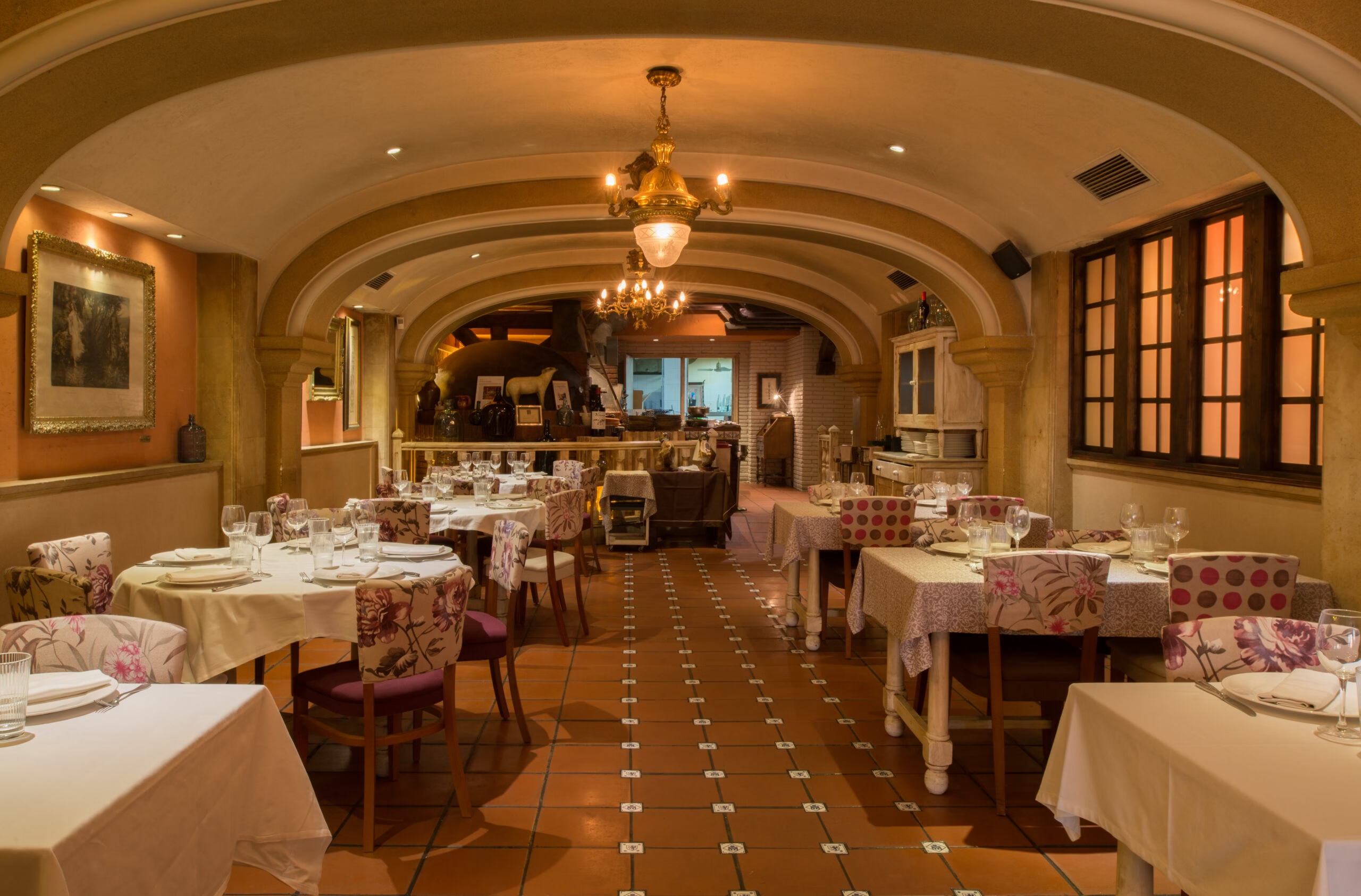
Jan-Feb 2026 | Rednote | KOC campaign
- 42 KOC collaborations (21 physical visits + 21 virtual/UGC posts)
- 673,742 total views and 14,284 total interactions
- 4,970 likes · 5,942 saves · 2,894 shares · 478 comments
- 2.12% average engagement rate
- Physical visit posts: 6x more views, 9x more likes than virtual posts
- Top single post: 109,905 views · 1,502 likes · 891 shares (16% of total campaign reach)
The hero product was cochinillo (roast suckling pig). Transparent pricing ($40-50 per person, generous portions) appeared organically in KOC captions and drove the “bei zhong cao” effect — users tagging friends and commenting “saved! going tomorrow.”
Case Study 2 — Taller de Tapas (3-Location Barcelona Chain)
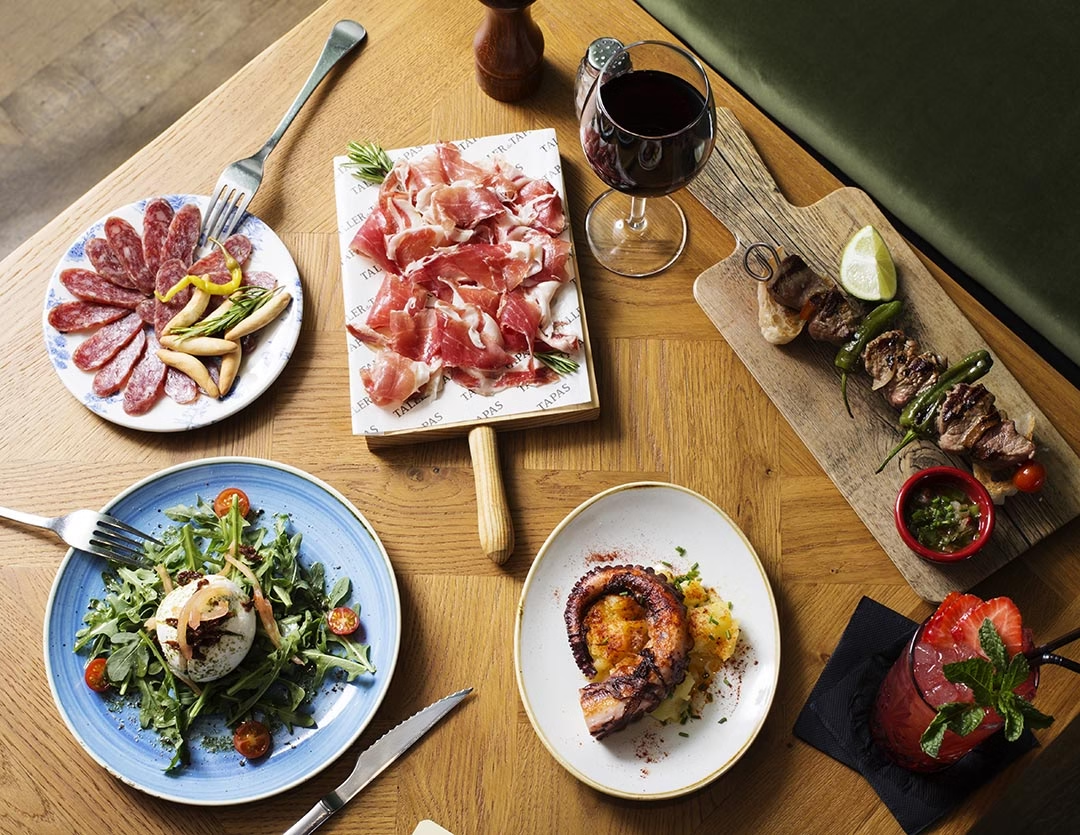
Aug-Oct 2025 | Rednote | Rambla de Catalunya · St. Josep Oriol · Argenteria
- Mix of physical dining visits and virtual/UGC posts across 3 locations
- Top posts: 76,887 views (virtual) · 58,708 views / 398 likes / 505 saves / 281 shares (physical) · 31,836 views (virtual)
- All reservations tracked and confirmed per influencer, per location
- Key finding: micro-KOCs with local Barcelona audiences outperformed macro-influencers in tourist-heavy neighborhoods
The multi-location approach became a strategic advantage: InfluChina tested content formats and KOC profiles across locations simultaneously, optimizing budget allocation in real time.
Case Study 3 — Barcelona Restaurant Group (Bodega Joan + Pasa Tapas + Season Tapas)
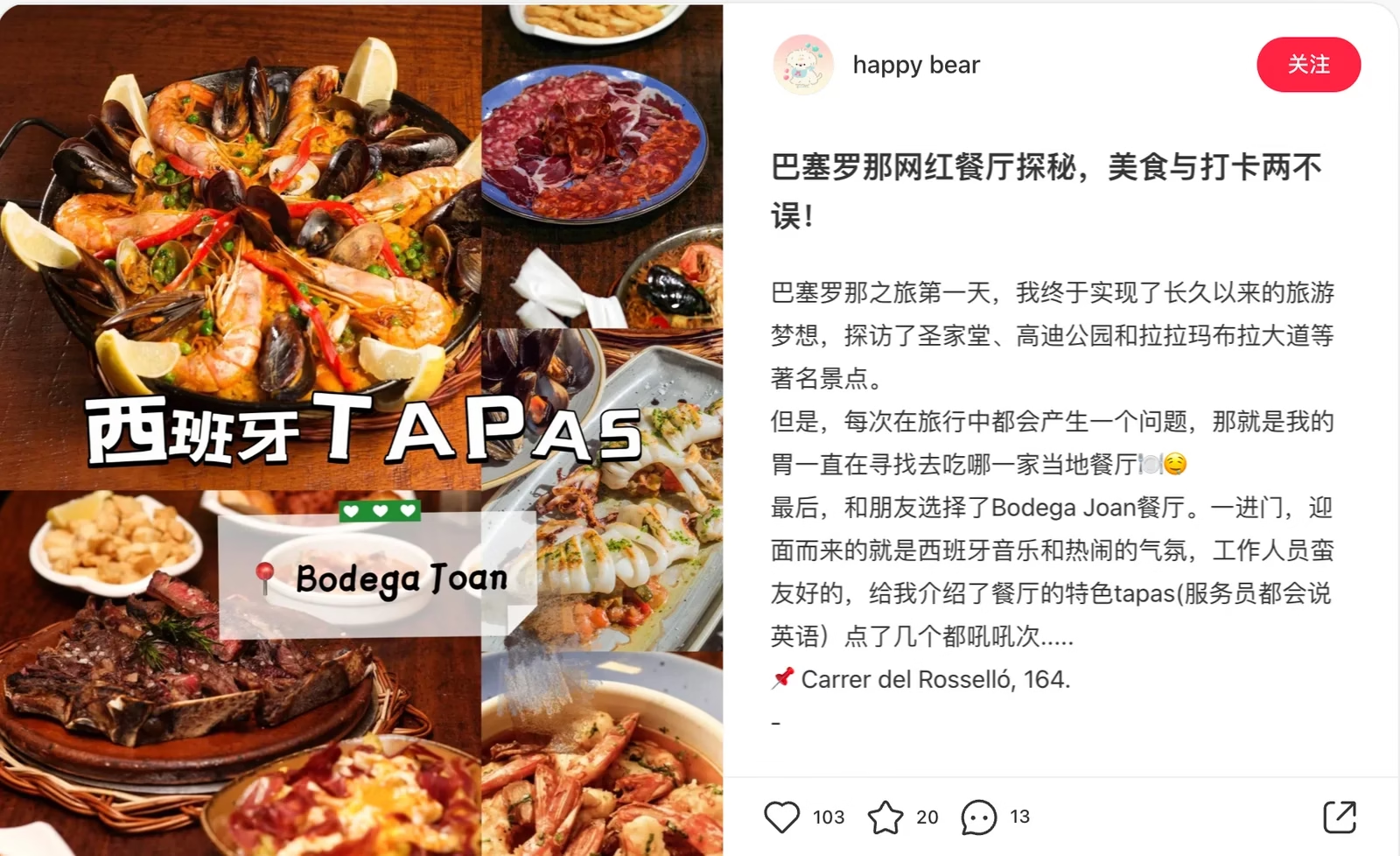
May-Oct 2025 | Rednote | KOC campaign across 3 restaurants
- 936,214 total views
- 6,208 likes · 6,036 saves · 668 comments · 2,517 shares
- Best posts: 262,762 views (Bodega Joan) · 201,158 views / 6,077 likes / 4,732 saves (Season Tapas) · 93,255 views (Pasa Tapas)
Running three restaurants simultaneously unlocked a compounding network effect: the same KOCs built genuine authority within the “Barcelona food scene” niche on Rednote. Each new campaign benefited from the credibility established in the previous one — and cost per view dropped as KOC relationships matured.
Across all three campaigns: physical KOC visit content outperformed virtual posts by 6x in views and 9x in likes. The lesson is simple — invest in real dining experiences, not sponsored captions.
8. Chinese KOC Marketing for Restaurants: How to Choose Influencers
Now that we’ve seen the results KOC campaigns can deliver, the question is: how do you actually choose the right influencers? Restaurant KOC marketing requires careful selection based on audience demographics, content quality, and authentic engagement — not follower counts alone.
Types of Food KOCs and Their Audiences
- Nano-KOCs (1K-10K followers): Hyper-local audiences, highest authenticity, lowest cost — ideal first layer
- Micro-influencers (10K-100K): Strong engagement rates, niche food audiences — the workhorse of restaurant campaigns
- Macro-influencers (100K-1M): Broader reach with strong engagement — best for tourist-area restaurants
- Mega-influencers (1M+): Awareness-only plays; rarely the best ROI for individual restaurants
Vetting and Selecting Restaurant KOCs
Successful finding Chinese influencers requires systematic evaluation:
- Audience analysis: Verify follower demographics match your target market
- Content quality: Review recent posts for food photography skill and storytelling
- Engagement authenticity: Check comment quality and response patterns to spot purchased engagement
- Brand alignment: Ensure the KOC’s style fits your restaurant’s positioning
- Past restaurant work: Review previous dining collaborations and their actual performance
KOC Pricing and Expected Performance
| Influencer Tier | Follower Range | Typical Cost per Post | Expected Reach | Best Fit |
|---|---|---|---|---|
| Nano-KOC | 1K-10K | $50-200 | 500-2K views | Local neighborhood restaurants |
| Micro-KOC | 10K-100K | $200-800 | 2K-15K views | Specialty cuisine restaurants |
| Macro-KOL | 100K-1M | $800-3,000 | 15K-80K views | Tourist-destination restaurants |
| Mega-KOL | 1M+ | $3,000-15,000 | 80K+ views | Flagship restaurant launches |
Source: InfluChina database analysis across 250,000+ influencers, 2026.
Negotiating KOC Partnerships
- Deliverables specification: Exact content requirements — post count, video length, platform
- Performance metrics: Minimum view counts, engagement benchmarks, attribution tracking
- Usage rights: Permission to repost content on owned channels
- Timeline coordination: Schedule visits during off-peak hours to allow content creation without disrupting service
Access Our Restaurant KOC Strategy
9. 90-Day Restaurant Marketing Implementation Roadmap
Successful promotion to Chinese tourists requires systematic execution over 90 days. This roadmap balances foundation building with active KOC campaigns and performance optimization.
90-Day Implementation Timeline
| Month | Key Activities | Platform Focus | Expected Outcomes | Budget Allocation |
|---|---|---|---|---|
| Month 1 | Dianping listing setup, KOC research, content planning | Dianping + KOC outreach | Active listing, KOC shortlist | 30% ($1,500-2,100) |
| Month 2 | KOC campaign launch, physical visit collaborations | Rednote + Douyin via KOCs | First campaign results | 50% ($2,500-3,500) |
| Month 3 | Performance analysis, scaling successful KOCs | Top-performing platform + KOCs | ROI-positive campaigns | 20% ($1,000-1,400) |
Source: InfluChina 90-day restaurant onboarding methodology, 2026.
Month 1: Foundation
- Week 1-2: Complete Dianping business verification and listing optimization
- Week 3: Build a KOC shortlist of 20-30 candidates across nano and micro tiers
- Week 4: Professional food photography session covering signature dishes
Month 2: KOC Campaign Launch
- Week 5-6: Outreach and negotiate collaboration terms with selected KOCs
- Week 7: Execute first wave of physical visit collaborations
- Week 8: Track Rednote and Douyin performance; coordinate Dianping review prompts
Month 3: Optimization and Scale
- Week 9-10: Analyze which KOC profiles drove the most attributed reservations
- Week 11: Double down on top-performing KOCs; cut underperformers
- Week 12: Plan ongoing strategy based on cost-per-reservation data
10. Common Mistakes to Avoid
Restaurant owners frequently make costly errors when attempting to attract Chinese tourists. These mistakes stem from misunderstanding Chinese digital culture and applying Western marketing logic to Chinese platforms.
- Opening an official account first: The #1 mistake (covered in Section 2). Don’t build a brand audience from zero — borrow KOC audiences instead.
- Direct translation: Simply translating English content instead of creating culturally relevant Chinese messaging
- Platform misunderstanding: Using Rednote like Instagram or treating Dianping like Yelp without understanding the user behaviors
- Fake KOC partnerships: Working with influencers who have purchased followers instead of authentic engagement
- Ignoring mobile payments: Not accepting Alipay creates friction for Chinese customers
- Generic food photography: Stock photos instead of authentic images of the actual restaurant’s dishes
- Inconsistent KOC cadence: A single collaboration burst then silence — campaigns need rhythm
- Neglecting Dianping: Failing to respond to reviews or manage the listing kills bookings even when discovery is strong
- Price opacity: Hiding prices forces users to ask — pre-empting price questions drives conversions
- Cultural insensitivity: Misunderstanding Chinese dining customs and preferences in content creation
The biggest mistake restaurants make is treating Chinese social media like translated Western marketing. Success requires understanding that Chinese platforms have completely different user behaviors, content preferences, and cultural expectations — and that real diners, not brand accounts, drive trust.
How InfluChina Helps Restaurants Attract Chinese Tourists
InfluChina specializes in restaurant marketing campaigns that connect international dining establishments with Chinese tourists through KOC partnerships and proven social media strategies.
Our restaurant marketing services include:
- KOC & KOL Marketing: Access to 250,000+ categorized food influencers across all tiers
- Multi-Platform Management: Coordinated campaigns across Rednote, Douyin, and Dianping — no wasted spend on official accounts that don’t convert
- Campaign Strategy: KOC-led campaigns like our Barcelona Restaurant Group success (936,214 views across 3 restaurants)
- Performance Tracking: Reservation attribution connecting social media engagement to actual restaurant bookings
With 400+ campaigns launched and 1 billion+ consumers reached, InfluChina delivers measurable results for restaurants serious about attracting Chinese tourists.
Conclusion: Capture Your Share of the $277 Billion Chinese Tourism Market
Chinese tourists represent the world’s largest outbound travel market, spending $277 billion annually with food experiences driving 73% of travel decisions. The three essential platforms — Rednote, Douyin, and Dianping — cover the complete Chinese tourist restaurant discovery journey.
Success requires understanding that Chinese social media marketing operates fundamentally differently from Western approaches. Don’t open an official account. Physical visit KOC content outperforms virtual posts by 6x, transparent pricing drives conversions, and multi-platform KOC strategies deliver the best ROI.
Our Barcelona restaurant clients achieved 936,214 views across 3 restaurants — without ever maintaining a brand-owned account. That’s the power of letting real diners do the talking.
Schedule Your Restaurant Marketing Consultation
Frequently Asked Questions
Do I need to open an official account on Rednote or Douyin for my restaurant?
No — and we strongly advise against it. Official accounts require constant content production, get poor organic reach, and rarely deliver ROI proportional to the effort. Instead, get visibility through KOC marketing: real Chinese influencers visit your restaurant and share authentic content with their audience.
How much does Rednote restaurant marketing cost and what results can I expect?
KOC campaigns on Rednote typically cost $50-3,000 per influencer depending on tier and content scope. Expect 500-80,000+ views per post based on the KOC’s following. Our El Yantar campaign generated 673,742 views over 42 collaborations.
What are the best Chinese social media platforms for restaurant promotion?
The three essential platforms are Rednote (discovery and evaluation through KOC content), Douyin (discovery through short videos), and Dianping (review evaluation and booking). Rednote drives the highest conversion rates for international restaurants targeting Chinese tourists.
How do I find and work with Chinese food influencers for my restaurant?
Start by analyzing audience demographics, content quality, and authentic engagement. Micro-KOCs (10K-100K followers) often deliver better ROI than mega-influencers for restaurants. Physical dining visits outperform virtual posts by 6x in our campaigns.
What content performs best for restaurant marketing on Chinese platforms?
Hero dish photography with transparent pricing, behind-the-scenes cooking videos, and authentic dining atmosphere content. Physical visit KOC posts generate 6x more views and 9x more likes than virtual content.
How long does it take to see results from Chinese social media restaurant marketing?
Initial engagement appears within 24-48 hours of KOC posts. Meaningful reservation increases typically occur within 2-4 weeks. Full campaign optimization and ROI realization require 90 days of consistent activity.
What’s the difference between Rednote and Dianping for restaurant marketing?
Rednote drives discovery and evaluation through visual lifestyle content. Dianping handles review evaluation and booking through detailed reviews and ratings. Chinese tourists use Rednote for inspiration and Dianping for verification before booking.
Can I manage Chinese social media marketing without speaking Chinese?
You can’t do it well alone. KOC management, content vetting, comment monitoring, and Dianping review responses all require native Chinese expertise. Working with a specialist agency is far more cost-effective than hiring an in-house Chinese marketing team.
What mistakes should restaurants avoid when marketing to Chinese tourists?
Avoid opening an official account, direct translation, fake KOC partnerships, single-platform focus, ignoring mobile payments, generic photography, inconsistent posting, neglecting Dianping reviews, price opacity, and cultural insensitivity.
How do I measure ROI from Chinese social media restaurant marketing?
Track awareness metrics (reach, impressions), engagement (likes, saves, shares), conversion (reservations attributed to specific KOC campaigns), and revenue impact. The Barcelona Restaurant Group campaign generated 936,214 views across 3 restaurants.
